






If you’re at risk of speech loss or someone with a speech disability, you can use Personal Voice on iPhone to create a synthesized voice that sounds like you.
You can use your Personal Voice with Live Speech and have what you type spoken out loud during in-person conversations, in Phone and FaceTime calls, and in assistive communication apps. It’s saved securely on your iPhone. To create one, you must first set a passcode.
Note: Personal Voice is available in English (U.S.), Mandarin Chinese (China mainland), and Spanish (Mexico) and is available on iPhone 15 Pro models, iPhone 16 models and later.
- Start the Settings app on your iPhone.
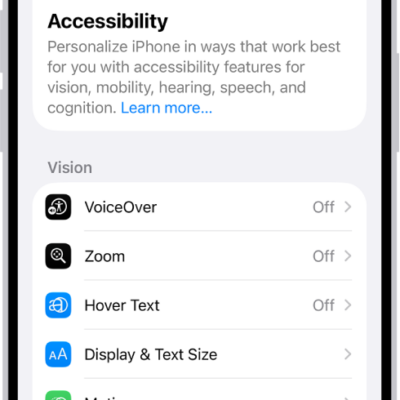
- Tap Accessibility and then tap Personal Voice.
-
Tap Create a Personal Voice and then follow the onscreen instructions.
(If you need to pause your recording session, tap Done. To resume, tap the name of your Personal Voice, then tap Continue Recording.)
Turn on Share Across Devices, and your Personal Voice can be used on all of your devices with iCloud. And with Allow Apps to Request to Use turned on, apps can ask to use your Personal Voice.
Note: To see the option to create your Personal Voice, you must first set a passcode. Personal Voice is available on supported iPhone models and is not available in all languages.
Your Personal Voice, Apple says, is saved securely on your iPhone for you to use during Phone and FaceTime calls, in-person conversations, and third-party alternative and augmentative communication (AAC) apps.
Important: Personal Voice can be used only with Live Speech and with third-party apps that you allow, such as Augmentative and Alternative Communication (AAC) apps. You can use Personal Voice only to create a voice that sounds like you on device, using your own voice, and for your own personal, noncommercial use.
Your Legacy Contact won’t be able to access your Personal Voice.