







The accessibility features for speech on iPhone are built-in tools for communicating in the way that works best for you, whether you’re nonspeaking, at risk of speech loss, or someone with a speech disability. You can have what you type spoken out loud, create a synthesized voice that sounds like you, and more.
You can even control iPhone with your voice, using spoken commands or simple sounds like an S-sound or a mouth pop. Siri can also wait longer for you to finish speaking, and Dictation lets you enter text using just your voice.
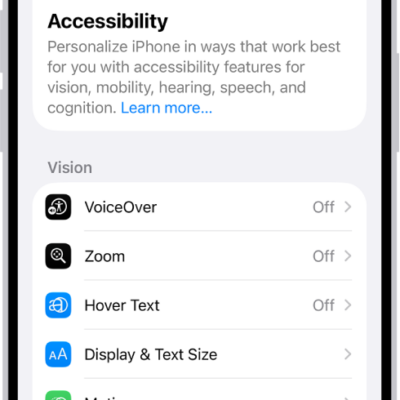
To explore accessibility features for speech on an iPhone, go to Settings > Accessibility, then scroll down to the Speech section.
Type to speak
- Live Speech: If you’re unable to speak or you have a speech disability, type what you want to say and have iPhone speak it.
- Personal Voice: If you’re at risk of losing your ability to speak, create a synthesized voice that sounds like you.
- Type to Siri: Type your Siri requests instead of speaking them.
Control iPhone with your voice
- Use voice commands: Speak commands to navigate and interact with what’s on the screen, dictate and edit text, and more.
- Use simple sounds: You can use voiced or voiceless sounds—like an S-sound or a mouth pop—to navigate and interact with what’s on the screen.
- Vocal Shortcuts: Have iPhone perform an action when you speak a word or another sound of your choosing.
- Have Siri listen for atypical speech: If you have an acquired or progressive condition that affects speech, have Siri recognize a wider range of atypical speech patterns.
Siri can also wait longer for you to finish speaking. And with Dictation, you can enter text using just your voice.
Quick tip: Your go-to accessibility features and settings are a button click away, or you can control them from Control Center.