

You can use the Files app and other supported apps to access files stored on external devices, such as USB drives and SD cards, connected to your iPhone. Depending on your iPhone model and device, you may need an adapter. And the device must have only a single data partition.
Connect a USB drive or an SD card reader
-
Attach the USB drive or SD card reader to the charging port on your iPhone using a compatible connector or adapter.
You may need the Lightning to USB Camera Adapter, Lightning to USB 3 Camera Adapter, USB-C to SD Card Camera Reader, or Lightning to SD Card Camera Reader (all sold separately).
Note: An external storage device must have only a single data partition, and it must be formatted as APFS, APFS (encrypted), macOS Extended (HFS+), exFAT (FAT64), FAT32, or FAT. To change the formatting of a storage device, use the Files app or a Mac or PC.
-
Do any of the following:
-
Insert an SD memory card into a card reader: Don’t force the card into the slot on the reader; it fits only one way.
Note: You can import photos and videos from the memory card directly to the Photos app.
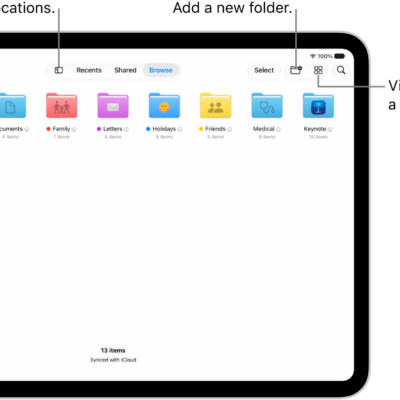
- View the contents of the drive or memory card: In a supported app (for example, Files), tap Browse and tap the name of the device below Locations. If you don’t see Locations, tap Browse again.
- Disconnect the drive or card reader: Remove it from the charging port on iPhone.
Note: External hard drives often require an external power source when used with iPhone. If an external hard drive doesn’t supply its own power, and your iPhone has a USB-C connector, you can use a powered USB hub. If your iPhone has a Lightning connector, you can use the Lightning to USB 3 Camera Adapter connected to a USB power adapter.
-
Insert an SD memory card into a card reader: Don’t force the card into the slot on the reader; it fits only one way.