




You can use iPhone Mirroring to control your iPhone from your nearby Mac. When iPhone Mirroring is turned on, you can also receive iPhone notifications on your Mac and keep track of Live Activities, so you don’t miss a thing.
Your iPhone needs iOS 18 or later and your Mac needs macOS 15 or later, and the two have to be signed in to the same Apple Account and within 30 feet (10 meters) of each other.
Here’s how to control your iPhone from your Mac.
Note: iPhone Mirroring isn’t compatible with some iPhone features, such as the camera and microphone. And while you’re using iPhone Mirroring, some Continuity features like Continuity Camera and AirPlay won’t be available on your Mac.
Before you begin
Before you start, check that all of these are true:
- Both devices have Wi-Fi and Bluetooth® turned on.
- You’re signed in to the same Apple Account on both devices.
- Your devices are within 30 feet (10 meters) of each other.
- Your iPhone has iOS 18 or later and your Mac has macOS 15 or later.
- Both devices meet minimum system requirements for iPhone Mirroring.
If you’re using a VPN, check that its configuration doesn’t prevent local networking, which may interfere with some Continuity features.
You can only use iPhone Mirroring if it’s available in your country or region, and iPhone Mirroring isn’t currently available in the European Union.
In a country or region where iPhone Mirroring isn’t available, iPhone Mirroring tells you that’s the reason it’s unable to connect to your iPhone.
Set up iPhone Mirroring on your Mac
-
Make sure your iPhone is turned on and nearby, with the screen locked.
Note: Your iPhone must be nearby to use iPhone Mirroring.
- Go to the iPhone Mirroring app on your Mac.
- Click Connect.
-
Enter your iPhone passcode. Then choose one of the following:
- Ask Every Time: Receive a prompt for Touch ID, Face ID, or your device passcode each time you use iPhone Mirroring.
- Authenticate Automatically: Automatically connect to iPhone Mirroring without needing to authenticate.
Note: If you see an alert on your iPhone that says Trust This Computer? tap Trust. You may be asked to enter your device passcode to proceed. If you see an alert on your Mac that says “Allow accessory to connect?” click Allow.
- Choose whether or not to Allow Notifications from iPhone.
Choose which iPhone to use with iPhone Mirroring
Though you can set up more than one iPhone for iPhone Mirroring on your Mac, you can connect to only one iPhone at a time.
- Go to the iPhone Mirroring app on your Mac.
- Click iPhone Mirroring Settings and click Change iPhone.
- Under Widgets, click the iPhone pop-up menu and choose your iPhone.
You can also open the System Settings app on your Mac and click Desktop & Dock in the sidebar (you may need to scroll down). Under Widgets, choose your iPhone from the iPhone pop-up menu.
Use iPhone Mirroring on your Mac
- Make sure your iPhone is turned on and nearby, with the screen locked.
- Go to the iPhone Mirroring app on your Mac.
- Click Continue.
-
Do any of the following:
- Click to tap: Click your Mac computer’s mouse or trackpad to tap. You can also swipe and scroll in the iPhone Mirroring app, and use your keyboard to type.
- Reposition the window: Move the pointer to the top of the window and drag the window by the title bar that appears.
-
Drag to resize the window: Hold the pointer near the edge of the iPhone Mirroring window until it becomes a double arrow and drag the window to the size you want. When you’re using a resizable app, like Weather or Photos, the amount of content that appears changes as you resize. When you’re using the Home Screen, App Switcher, or an app that isn’t resizable, the content scales larger or smaller as you resize. If you resize an app, it reopens at that size the next time you use it in iPhone Mirroring; to return it to its original size, choose View > iPhone Size.
Note: Window resizing in iPhone Mirroring requires iOS 27 or later, and isn’t supported on iPhone 11, 12, or 13 (any model) or iPhone SE (2nd or 3rd generation). On unsupported models, the resize cursor scales the window instead of resizing it.
- Choose a window size: Choose View in the iPhone Mirroring menu bar. Choose an option. iPhone Size returns the window to its original iPhone size. Actual Size shows the original content without any scaling applied. Zoom In shows the same content scaled larger, and Zoom Out shows the same content scaled smaller.
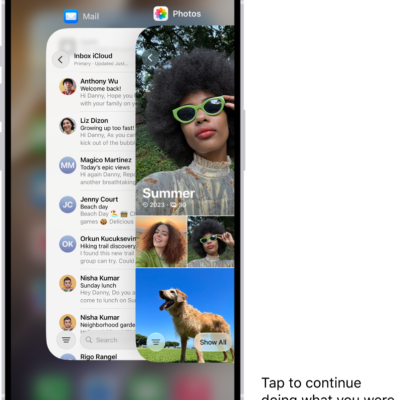
- Open the App Switcher: Move your pointer to the top of the iPhone Mirroring app until the title bar appears. Then click the App Switcher button to open the App Switcher. The window returns to iPhone size.
- Go to the Home Screen: If you’re in an app and want to return to the Home Screen, move your pointer to the top of the iPhone Mirroring app until the title bar appears and click the Home Screen button. The window returns to iPhone size.
- Rearrange your Home Screen and perform quick actions: On the Home Screen, Control-click any app, then click Edit Home Screen. You can also Control-click an app and choose to turn some apps into widgets or to perform quick actions, like creating a new note in Notes or sending your location in Maps.
An iPhone widget you open on your Mac opens in the iPhone Mirroring app.
Get iPhone notifications on your Mac
While setting up iPhone Mirroring, you can also turn on iPhone notifications. On your Mac, iPhone notifications appear with an iPhone badge, which tells you they came from your iPhone.
Note: Your iPhone must be turned on for its notifications to appear on your Mac, but it doesn’t have to be nearby.
If you didn’t choose to turn on iPhone notifications while setting up iPhone Mirroring, you can still do it. To switch them on, or to choose the apps that send notifications to your Mac, do either of the following:
- On your iPhone: Go to Settings > Notifications, choose any app, then turn “Show on Mac” on or off.
- On your Mac: Choose Apple menu > System Settings, click Notifications in the sidebar (you may need to scroll down), then click “Allow notifications from iPhone.” Under Mirror iPhone Notifications From, turn the option on or off for any app.
View Live Activities from iPhone on your Mac
Setting up iPhone Mirroring also puts Live Activities from your iPhone in the menu bar on your Mac.
- On your Mac, click the Live Activity in the menu bar to view more information.
- Do any of the following:
- Click the Live Activity again to open the relevant app in the iPhone Mirroring app on your Mac.
- Click outside of the Live Activity to close it, but continue to see it in the menu bar.
- Move the pointer over the Live Activity, then click the Close button to close the Live Activity and remove it from the menu bar.
Transfer files using iPhone Mirroring
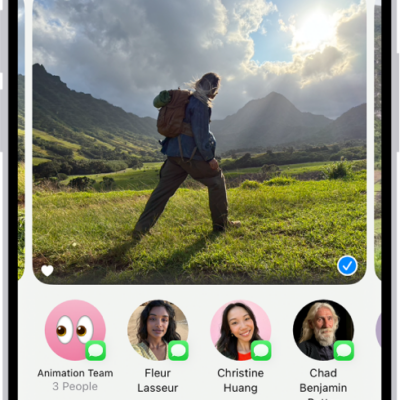
You can transfer files, photos, videos, and more between your Mac and iPhone in supported apps using iPhone Mirroring. To transfer a file, simply drag and drop it from your Mac to the iPhone Mirroring app window, or vice versa.
Turn off iPhone Mirroring
- On your iPhone, open the Settings app.
- Tap General and tap AirPlay & Continuity. Then tap iPhone Mirroring.
- Tap AirPlay & Continuity, then tap iPhone Mirroring.
- Tap Edit in the top right and then select a Mac to remove.
If iPhone Mirroring isn’t working
- Make sure that you’re signed in to the same Apple Account on both devices.
- Make sure that your iPhone and Mac have Wi-Fi, Bluetooth, and Handoff turned on.
- Your devices must be within 30 feet (10 meters) of one another.
- If you have more than one iPhone set up for iPhone Mirroring, you can choose which iPhone you want to use. On your Mac, go to iPhone Mirroring Settings, click Change iPhone, then choose your iPhone.