




In addition to the apps that come with iPhone and that you use with iCloud, iPhone works with Microsoft Exchange and many of the most popular internet-based mail, contacts, and calendar services. You can set up accounts for these services.
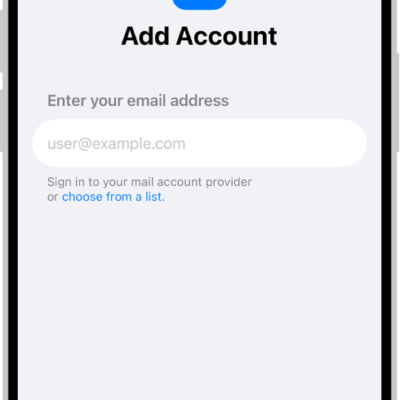
You can set up a mail account, a contacts account, or a calendar account, and for a mail account, it starts with entering your email address.
Here’s how to set up mail, contacts, and calendar accounts on iPhone.
Set up a mail account
- Start the Settings app on your iPhone.
- Tap Apps and then tap Mail.
- Tap Mail Accounts, then tap Add Account.
- Enter your email address, tap Next, and enter your email account information.
You can also tap “choose from a list” under the email address field to select the email service you want to use—for example, iCloud, Microsoft Exchange, or Gmail (Google).
If your email service isn’t listed, tap Add Other Account, tap Mail Account, then enter your email account information.
Set up a contacts account
- Start the Settings app on your iPhone.
- Tap Apps, then tap Contacts.
- Tap Contact Accounts and then tap Add Account.
- Do one of the following:
- Tap a provider—for example, iCloud or Microsoft Exchange—then enter your account information.
- Tap Other, tap Add LDAP Account or Add CardDAV Account (if your organization supports it), then enter the server and account information.
Set up a calendar account
- Start the Settings app on your iPhone.
- Tap Apps and then tap Calendar.
- Tap Calendar Accounts and then tap Add Account.
- Do one of the following:
- Choose a provider: Tap a provider—for example, iCloud or Microsoft Exchange—then enter your account information.
- Add a CalDAV, CardDav, or LDAP account: Tap Add Other Account, choose an option, and then enter your server and account information.
- Subscribe to iCal (.ics) calendars: Tap Other, tap Add Subscribed Calendar, and then enter the URL of the .ics file to subscribe to; or import an .ics file from Mail.
Turn on iCloud Keychain on your iPhone, and your accounts stay up to date on all your devices where it’s turned on.