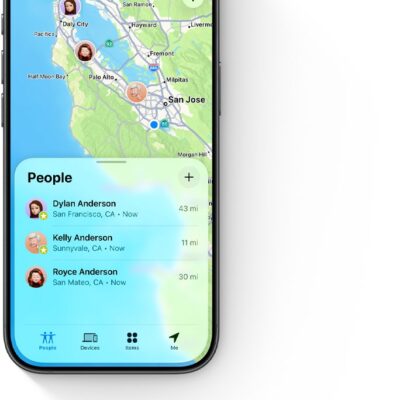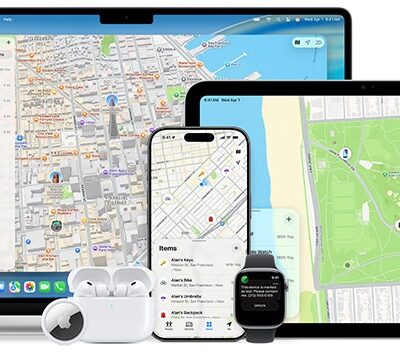






Activation Lock is an Apple feature designed to deter theft by preventing erasing and re-using an iPhone, iPad, Mac, or Apple Watch that has Find My enabled. While someone can still erase a device with Find My turned on, they are unable to activate and use the iPhone or iPad without having the Apple Account password for the account with which the device was used. Thieves have some hardware tricks to bypass this, unfortunately, but they don’t always work.
A device with Activation Lock active can still be tracked via Find My even after it’s been erased! And Apple will display a screen to any potential buyer or other user that the device is locked, deterring thefts and duped buyers.
Activation Lock was first released in 2015, and works with the iPhone 5s and later and iPad Air and later. An Apple Watch needs to run watchOS 2 or later. Macs models that support Activation Lock must either have a T2 Security Chip (Intel) or use an Apple silicon processor; in either case, macOS 10.15 Catalina or later must also be installed.
Even AirTags have a sort of Activation Lock—the Find My Lock—which is covered in how to reset an AirTag.
To avoid this when selling an iPhone (or associated Apple Watch), iPad, or Mac, disable Find My before erasing, which requires entering the associated iCloud account’s password. (Apple prompts you to disable Find My before letting you erase your device.) You can also disable it via iCloud.com after a device is out of your hands. Once you disable Find My, tracking is off.
If you haven’t disabled Find My on a device and you lose access to your Apple Account, the device remains permanently locked as well.
When purchasing any used Apple hardware, ensure that Activation Lock was disabled before you pay!
Remove a device from your account
You might see devices in this list that you or your family member no longer possess or that no longer work. You can remove these items from your Apple Account in any of several places. This removal also disables Find My on the device if it’s connected to the internet or the next time it connects.
Starting with the version 27 releases, use your iPhone, iPad, or Mac if you want to remove a device. (Previously, Find My was the better place to start.) Go to System Setting/Settings > Account Name, then scroll to the bottom. You then tap or click Remove from Account. You’re prompted with an improved warning in the version 27 releases:
- In any version 27 operating system, Apple asks “Still Have This Device?” and defaults to a big blue OK button. To further discourage you, the dialog explains you should go to the device and sign out directly. Otherwise, tap or click Start Removal.
- In the version 26 releases and earlier, you’re given a briefing on what happens if you remove the device. Tap or click Remove to proceed.
Apple once warned you that “This Mac will reappear if it connects to the Internet and Find My is turned on.” That warning was clearly inadequate about the consequences!
Some devices may offer a removal button in the Find My app on an iPhone, iPad, or Mac. The Find My app appears to be the only way to remove your AirPods from an Apple Account. However, in both the version 26 and 27 releases, I found it inconsistent and confusing why I was sometimes given a Remove from Account or Remove button, and at other times it was dimmed or resulted in an error message.
For instance, I can’t remove my iPhone, even though I’m offered a button to do so. (This may be connected with Stolen Device Protection, but it’s not described that way.) The Find Devices web app on iCloud.com only shows Erase, not Remove, for all devices except my iPhone, and it produced the same error.
Nonetheless, if you’re in a Family Sharing group, you can remove people’s devices from their accounts via an iPhone, iPad, or Mac Find My app or Find Devices at iCloud.com. (Or remove your device from your account.) The Apple Account password for the device is required, and a second factor may also be requested.
The Apple Account website used to let you remove devices, but now it shows the same error in every case.
AppleCare+ needs Find My switched on first
Apple offers an extended warranty against loss and theft for iPhone, iPad, and Apple Watch owners in several countries: “AppleCare+ with Theft and Loss”; in some countries, it’s the only option for these devices. An iPhone plan is $9.99 per month. In the United States, you can also enroll multiple devices with AppleCare One, and any iPhone, iPad, or Apple Watch on that plan receives theft and loss coverage. These plans start at $19.99 per month for up to three devices with no yearly discount.
This theft and loss warranty covers hardware faults at no cost and breakage for a modest fee. In the United States, it’s $29 to fix an iPhone’s screen or back glass, and $99 for other damage.
For loss or theft of these covered models, you pay a bit more, like $149 for an iPhone or $129 for an iPad. They will even ship you a replacement phone if you’re outside your own country and in a covered country! (You can get replacements only twice in any 12-month period.)
However, there are two key requirements. First, Find My Device must be enabled before a loss or theft occurs. Second, your device must remain associated with your Apple Account until a customer service representative tells you to remove it.
When you call AppleCare customer service to report the loss or theft, a representative guides you through erasing your device via Find My (see how to erase a lost iPhone or Mac remotely), disabling it remotely (Apple doesn’t explain what this means), and then “transferring ownership” to ensure no one can reclaim a “lost” phone later. Read the fine print if you sign up for this warranty option.