
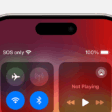


Focus uses Apple Intelligence to help you manage interruptions dynamically by evaluating the kinds of alerts and other attention-grabbing indicators that get through to you.
Intelligent Breakthrough & Silencing appears as an option in any Focus mode. Instead of rigid exclusions and inclusions, this option uses machine learning to understand how you work and adapts which attention-getting activities are delivered to you when your Focus mode is engaged.
Alternatively, you can use the Reduce Interruptions mode, which is essentially just a custom Focus mode with Intelligent Breakthrough & Silencing locked to the “on” position.
Even though you need Apple Intelligence to use Reduce Interruptions, the mode appears on all your devices regardless of whether syncing is enabled. On devices without Apple Intelligence, you don’t get the intelligent benefits.
With either Intelligent Breakthrough & Silencing or Reduce Interruptions engaged, Apple Intelligence processes each incoming notification separately and decides whether it’s important enough to break through and display it.
Importantly, Apple explains this analysis only vaguely and generically:
- The support documentation notes only, “The Reduce Interruptions Focus understands the content of your notifications and shows you the most important ones, but silences notifications that are less important.”
- In marketing copy, Apple says merely that the feature “highlights notifications that might need immediate attention.”
- When Apple executive Craig Federighi introduced Apple Intelligence in the keynote at the company’s 2024 Worldwide Developer Conference, he said, in reference to Reduce Interruptions, “It understands the content of your notifications to selectively surface only the ones that might need immediate attention, like a text about today’s daycare pickup.”
Apple also uses the term “notifications,” not the phrase “notifications and incoming calls,” so we can’t tell you for sure whether phone calls and FaceTime calls (as well as those from third-party calling apps) are analyzed for origin and other factors.
Given how coy Apple is about particulars, we can’t predict whether this option or mode will work well for you. It’s possible it will identify—through context clues from the sender, the text in the alert, calendar entries, and other data—exactly the best alerts to send you. Or it might miss incredibly important stuff or allow inconsequential stuff through. It’s impossible to know without you testing it out for yourself.
Because you can use other customization options that let you override which people and apps are either always included or excluded, you can potentially use those to mitigate any true disaster of a missed alert.