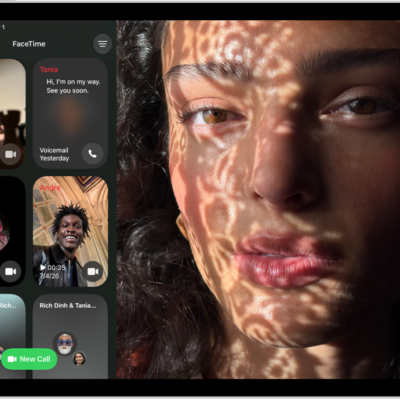
During a one-to-one FaceTime video or audio call, you can remotely control another participant’s screen or allow them to remotely control yours. The person controlling the screen can help with an issue or demonstrate how to use an app.
Both of you need iPadOS 18, iOS 18, or later. If the other person accepts your request, you can interact with their shared screen and even use the onscreen keyboard within apps. Either of you can decline a request.
Note: Remote control isn’t currently available in the European Union.
Request remote control
You can request control of an iPad or iPhone screen someone is sharing with you.
Note: You and the other participant must both have iPadOS 18, iOS 18, or later.
- Go to the FaceTime app on your iPad.
- Tap the window showing the shared screen.
-
Tap the Remote Control button.
If the other participant accepts your request, you can tap or swipe to interact with the shared screen. You can also use the onscreen keyboard within apps.
Accept a remote control request
Participants saved in your contacts can remotely control your screen if they’re using an iPad or iPhone with iPadOS 18, iOS 18, or later. To help protect your data and privacy, remote control requests may come with additional restrictions.
When you receive a remote control request notification in the FaceTime app on your iPad, tap Allow.
WARNING: The person remotely controlling the screen can perform actions on your iPad such as opening and closing apps, changing settings, deleting items, or sending messages. Only approve remote control requests from people you trust.
Making payments, erasing your device, or changing your Apple Account or Face ID settings may be off-limits to the person remotely controlling the screen. During a remote control session, your Face ID and Touch ID are disabled.
You can still tap, swipe, or type while your screen is remotely controlled—your actions take priority over remote actions.
Decline a remote control request
When you receive a remote control request notification while sharing your screen in the FaceTime app on your iPad, tap Don’t Allow. Screen sharing continues, and the other participant can still tap, draw, or write on your screen to highlight important areas.
Stop remote control
Do one of the following to end remote control at any time:
- If you’re allowing someone to control your screen: Tap Stop at the top right of the screen sharing window.
- If you’re controlling someone else’s screen: Tap the Remote Control button.
Remote control and screen sharing also end when a FaceTime call ends.
According to Apple, remote control isn’t available in all countries or regions.
See also
- Share your screen in a FaceTime call on iPad
- Collaborate on projects with Messages on iPad
- Use video conferencing features on iPad