

In iOS 26, Apple has introduced multiple new features to the Phone app that are designed to prevent unwanted calls and to save you time. If your iPhone is not receiving calls in iOS 26, the problem is fixable.
Usually some quick troubleshooting will do the trick. It works for most of us – a quick software update and you’ll be yammering away like there wasn’t a problem in the first place.
We spent some time searching and narrowing down the issue, so we thought we’d compile this quick and easy troubleshooting guide for what to do if an iPhone can’t receive calls after iOS 26 update. If it works for you, feel free to pay it forward – send it along to someone else in need and collect your good karma. And so, without further ado, here’s what to do if your iPhone isn’t receiving phone calls in iOS 26.
1. Check Your Mobile Plan Status
The first thing you should do if your iPhone is not receiving calls after iOS 26 update is to check that you have an active mobile plan. If your plan has been suspended for more than three to four weeks, your iPhone won’t receive incoming calls because most carriers only allow expired accounts to receive calls for a limited number of days.
If this is the case, simply reload and reactivate your mobile plan, and your iPhone will ring when you get calls again.
2. Disable Airplane Mode and Focus
This worked for me. Turning off Airplane Mode and Focus mode fixed my problem when I was not receiving calls after iOS 26 update.
If Airplane Mode is activated, your iPhone can’t receive any kind of communications signal. It also means you’ll have to switch it off if you want to receive calls. Open the Settings app, and if you see that Airplane Mode is on, tap to turn it off. If Airplane mode is already off, turn it on, wait five seconds, then turn it back off.
Focus is another feature that affects calls. It helps you control incoming calls, texts, and app notifications so that you can avoid distractions while working or resting. Unless you customize its settings, Focus modes such as Do Not Disturb and Sleep will disable incoming calls by default.
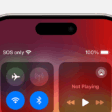
To check if this is the cause of your problem, open the Control Center and see if you have one of your Focus modes enabled. If yes, simply tap the mode’s icon to turn it off. Now, you should start hearing the ringtone when you get any calls.
3. Connect Your iPhone to the Internet
This fix applies if you intend to receive calls on your iPhone through FaceTime and third-party apps like WhatsApp and Messenger. For these apps, calls can’t come through if your iPhone is not connected to the internet.
So, all you need to do is enable cellular data or connect your iPhone to a Wi-Fi network to receive calls on such apps again. To turn on mobile data, go to Settings > Cellular and toggle on Cellular Data. To connect to a Wi-Fi network, go to Settings > Wi-Fi and select a Wi-Fi network from the list.
See also: How to Fix FaceTime Not Working on iPhone After iOS 26 Update
4. Check Your Phone Signal
If you’re at a remote outdoor location, or if it’s raining or snowing in your area, you may experience poor cell reception. Check the cell signal icon in your iPhone’s status bar to find out if this is why your iPhone is not receiving calls.
If you’re expecting a call at a particular time but notice that the icon only displays one or two filled bars, you can try going outdoors (if you’re in an indoor building) to obtain a stronger signal.
See also: How to Fix iPhone Showing “SOS Only” After iOS 26 Update
5. Disable Screen Incoming Calls setting
Call screening is an iOS 26 feature that is designed to eliminate interruptions by gathering information from the caller and giving users the details they need to decide if they want to pick up or ignore the call. If Screen Incoming Callsis on, any caller who is not in the list of your contacts will be required to provide their name and reason for calling before iPhone rings. Turning this setting off can help avoid missing important calls.
So, if you are not receiving calls after iOS 26 update, you can try disabling the feature to solve the problem.
- Go to Settings > Apps > Phone
- Under Screen Unknown Callers, select Never.
6. Disable Call Filtering setting
- Go to Settings > Apps > Phone. Scroll down to Call Filtering section. If Move to Unknown Callers is on, any calls and voicemails from numbers not in your contacts will be silenced and moved to Unknown Callers list.
- Tip: Doctors, banks, and delivery services may not call from their listed numbers. Keeping this setting off can help avoid missing important calls.
- Some users report that toggling this setting off and back on again can resolve the problem.
7. Disable Call Forwarding setting
- Still in Settings > Apps > Phone, check if Call Forwardingis on.
- Even if it appears to be off, some carriers can override this setting—so it’s worth double-checking with your carrier.
8. Check if You’ve Blocked the Caller
If you’re expecting a call from a particular number, but it never comes (even when the other person tells you they’re trying to phone), you may want to check if you’ve previously blocked it. Blocking a number on your iPhone prevents that person from calling you, so if you want to receive calls from the number, it’s time to unblock. Here’s how to check your block list and unblock them.
Go to Settings > Apps > Phone > Blocked Contacts. In the list of blocked contacts, swipe left on the desired entry and tap Unblock. Alternatively, tap Edit, then hit the red minus (–) button and tap Unblock.
9. Restart Your iPhone
If your iPhone doesn’t receive incoming calls even after trying the above solutions, try restarting your iOS 26 device. A simple reboot often clears up temporary glitches.
- Hold the side button and either volume button until the power slider appears.
- Slide to power off, wait a few seconds, then press and hold the side button again to turn it back on.
10. Review Third-Party Call Blockers
Suppose you’re waiting for a call from your bank. Any third-party call identification and spam-blocking apps you have installed may think the customer service number is a robocall or spam and thus block it.
To fix this, open any of those apps on your iPhone and whitelist any numbers you keep missing calls from. You may also want to turn off all call blocking from inside the app or by going to Settings > Apps > Phone > Call Blocking & Identification. Then, turn off any call identification apps you see here.
11. Update Your iPhone and Other Third-Party Apps
By this point, one or more of the above solutions should have fixed your iPhone not receiving calls after iOS 26 update issue. But in case you’re still having problems, make sure your iPhone is running on the latest iOS 26 software. Go to Settings > General > Software Update to see if an update is available for your device.
You should also update apps like WhatsApp, Messenger, or Zoom if you intend to receive calls through them. It may be a bug that’s been causing call reception issues, so updating the respective iPhone app might resolve the problem.
12. Remove and reinsert SIM card
If your iPhone has a physical SIM card, try removing your SIM card and reinserting it again. Doing this effectively de- and reactivates the card, hopefully removing any issues that were preventing your iPhone from receiving calls.
Locate the SIM card tray on your iPhone. Open the SIM card tray by pressing a SIM card ejector tool, straightened-out paperclip, or an earring backing into the hole in the SIM tray. Push the tray back in to reseat the SIM card.
13. Reset Network Settings
The last troubleshooting step you can try if you’re not receiving calls on iOS 26 is to reset the network settings on your iPhone. Go to Settings > General > Transfer or Reset iPhone > Reset > Reset Network Settings. This will erase all current saved settings, including Wi-Fi passwords, preferred networks, and VPN and APN settings that you’ve used before.
Receive Calls on Your iOS 26 Device Again
When you can’t receive calls at all on your iPhone, it’s usually due to three main reasons. One is software bug, the second is phone signal issues, and the third is that there’s a setting on your iPhone that’s blocking the call from coming through.
By applying the fixes above, you should be able to receive calls normally again. However, If you’ve tried all of the above steps and you still can’t receive calls in iOS 26, you you should contact your mobile carrier service provider or Apple Support for further assistance.
See also: How to Fix iPhone Not Making Calls After iOS 26 Update