









Got a tip for us?

While some people may find iPhones annoying, others may find them incredibly useful and user-friendly. However, there are several reasons why some people may find iPhones annoying, and we will explore them in-depth below.

1. Apple’s Walled Garden

The Apple ecosystem, commonly known as the "walled garden," can also be a significant source of frustration for some users. Apple’s strict rules and regulations on what can be installed on its devices can make it difficult to download and use third-party apps or software. Apple products are designed to work best with other Apple products, which means they can be difficult to integrate with other non-Apple devices or services. For instance, if you are an Android user, you may find it challenging to sync your contacts or calendar with your iPhone. Additionally, Apple’s proprietary Lightning cable and its closed operating system can limit users’ choices, making it difficult to use non-Apple products or software. Moreover, Apple’s strict control over their App Store can be frustrating for some users, as it limits the apps available for download.

2. High Price

Another factor that can make iPhones annoying is their high price point. Apple products are generally more expensive than their Android counterparts, and this can put a strain on some users’ budgets. Even though iPhones come with several features and functionalities that justify their price, not everyone can afford them. iPhones often require users to purchase additional accessories, such as a charger, which can add to the overall cost. Moreover, Apple’s constant updates and new models make it difficult to keep up with the latest technology, leading to frustration and annoyance.

3. Forced Updates

Apple frequently releases software updates for its devices, which can be a source of annoyance for some users. Although these updates often bring new features and functionalities, they can also cause older iPhones to slow down or malfunction. Moreover, these updates can take up significant amounts of storage space, leading to further frustration.

4. Overbearing Notifications

iPhones come with a constant barrage of notifications that can be both distracting and annoying. Although some of these notifications can be useful, such as email alerts or calendar reminders, others can be superfluous and unnecessary. Notifications from social media apps, for instance, can be especially disruptive, leading to a constant stream of updates and messages that can be difficult to ignore.

5. Limited Customization

Another factor that can contribute to iPhones being annoying is the lack of customization options. Apple products are known for their sleek and modern design, but this design can also be limiting for some users who prefer to personalize their devices. For instance, Android users have the ability to customize their home screens with widgets, which provide quick access to frequently used apps or information. In contrast, iPhone users are limited to a grid of icons on their home screen.

6. Limited Battery Life

Some users may find iPhones annoying because of their battery life. While newer models may have better battery life, older iPhones tend to drain quickly, leading to frustration and annoyance. Additionally, Apple’s proprietary batteries can make it difficult and expensive to replace them, leading to further irritation.

7. Limited File Sharing

The inability to share files easily with non-Apple users is another reason why some users find iPhones annoying. Apple’s proprietary file system, iCloud, can be difficult to navigate and may require an Apple ID to access. This can be a significant barrier for users who want to share files with non-Apple users.

8. Lack of Headphone Jack

The removal of the headphone jack in newer models is also a source of annoyance for some users. While Apple has provided alternative options such as AirPods, this can be an additional expense for users who prefer to use wired headphones.

9. Proprietary Components

Apple is well-known for its proprietary components, such as the Lightning cable used to charge and sync iPhones. These proprietary components can limit users’ choices, making it challenging to use non-Apple products or software.

Conclusion

While iPhones are incredibly popular and widely used, some users may find them annoying for various reasons, such as their cost, limited customization, Apple’s closed ecosystem, constant notifications, battery life, limited file sharing, and the lack of a headphone jack. However, it is important to remember that different users have different needs and preferences, and what one person may find annoying, another may find useful or even necessary.

iPhones are one of the most popular and sought-after smartphones in the market today. However, one common complaint that many iPhone users have is the weight of the device. iPhones are known to be relatively heavy compared to other smartphones in the same category. But why are iPhones heavy?

There are several factors that contribute to the weight of an iPhone, including the materials used, the size and screen of the device, the battery, and the components that are packed into it. Let’s take a closer look at each of these factors.

Materials Used

One of the reasons why iPhones are heavier than other smartphones is the materials used to make them. Apple uses high-quality materials like stainless steel and aluminum for the body of the iPhone. These materials are known to be sturdy and durable, but they also add to the overall weight of the device.

In comparison, some other smartphone manufacturers use plastic or polycarbonate materials that are lighter in weight. However, these materials are not as durable as the ones used in iPhones and can be easily scratched or cracked.

Size and Screen

The size and screen of an iPhone also play a role in its weight. Larger phones require more internal components to support the additional features, which also adds weight. In addition, iPhones have a relatively large screen size compared to some other smartphones in the market, which means that more components are required to power and operate the device. Apple tries to balance the size and screen of their phones with their weight, but larger phones will always be heavier.

Battery

Another factor that contributes to the weight of an iPhone is the battery. Apple prioritizes battery life, which means that they use a larger battery to ensure that the device can last for a long time without needing a recharge. The battery is one of the heaviest components in a smartphone, and the larger the battery, the heavier the phone will be. Apple has made significant strides in battery technology over the years, but a larger battery still requires more weight.

Components Packed into the Device

iPhones are packed with advanced components that make them perform better than most smartphones. These components include the A-series chip, which powers the device, and a high-quality camera that takes amazing photos and videos.

These advanced components require more space and contribute to the overall weight of the device. Additionally, iPhones also come with features like water resistance, which requires additional components like seals and gaskets, further adding to the weight of the device.

Durability

Finally, Apple designs their phones to be durable and long-lasting. This requires additional reinforcement and protective measures, which can add weight to the device. Apple uses materials like reinforced glass and stainless steel to make their phones more durable, which can add to the weight of the phone.

In conclusion, iPhones are heavier than other smartphones because of the high-quality materials used, the size and screen of the device, the battery, and the advanced components packed into it. While the weight of the device may be a concern for some users, it is important to note that the weight is a result of Apple’s focus on durability, performance, and features that make iPhones one of the most sought-after smartphones in the market.

These are the tips and tricks you should be using to get the most out of Messages app on Your iPhone.

No matter what iPhone model you carry or how you usually use it, one thing is a near-universal constant:

You’re gonna spend a ton of time sending and reading messages.

The messages may be from clients, colleagues, or your cousin Crissy from Cleveland (damn it, Crissy!). But regardless of who sends ’em or what they’re about, they’re all popping up on your phone and cluttering your weary brainspace.

My fellow iPhone adorer, I’m here to tell you there’s a better way.

Apple’s iPhone Messages app has gotten surprisingly good over the years. That’s no big secret. If you’re only relying on what you see on the surface within iPhone Messages, though, you’re missing out on some of its most powerful and underappreciated efficiency-enhancing options.

In this article, we’ll explore the best iPhone Messages tips and tricks. They may not be able to cut down on the number of messages you send and receive on your iPhone (DAMN IT, CRISSY!), but they will help you spend less time fussing with ’em. And they might just help you have a more pleasant experience, too.

Without further ado, here are the best tips and tricks to help you use the Messages app on Your iPhone to its fullest potential.

15 Tips and Tricks for More Efficient iPhone Messaging

1. Reply messages from the Lock Screen

Sometimes all you need to do when you receive a message is give a quick reply. The ability to reply from the Lock Screen makes it possible to send off a reply without taking the time to unlock your iPhone, find the messaging app, select the message and then reply. Thankfully, there’s a cool Messages trick you can use to quickly reply to messages from the Lock Screen on your iPhone.

  1. From the Lock Screen, touch and hold the notification that you want to reply to. Or depending on your device, you might need to swipe left over the notification and tap View.
  2. Type your message.
  3. Tap the Send button.

If you have an iPhone X or later and can’t reply to a message from the Lock Screen, head over to Settings > Face ID & Passcode, and turn on the switch next to Reply with Message. If you have an iPhone SE (2nd and 3rd generation), or iPhone 8 or earlier, head over to Settings > Touch ID & Passcode > Allow Access When Locked, and turn on the switch next to Reply with Message.

2. Pin important conversations in Messages

One way you can make your favorite people and your favorite conversations easier to access is by pinning them to the top of the screen so they stay permanently at the top of your chats. This Messages trick can come in handy when you want to save a text to quickly find it later, instead of scrolling through long conversations looking for it.

  1. In Messages, tap Edit or the More button .
  2. Tap Edit Pins , then tap the Pin button .
  3. Tap Done.

You can also touch and hold a conversation to pin it.

3. Set an iMessage Photo and Name on Your iPhone

Do you ever wish you could share your profile photo and name on iMessage like you can do on some instant messaging (IM) apps? Wish no more! There’s a cool iMessage trick that lets you set a personal photo and name, in addition to tweaking their visibility through dedicated privacy settings. When you share this information with someone, iOS will prompt them to update your contact card on their side. This way, your photo stays up to date in their address book without them having to update your contact card manually. Follow the steps below to set an iMessage photo and name on your iPhone.

  1. Start the Settings app on your iPhone.
  2. Scroll down and select Messages.
  3. Tap on Share Name and Photo.
  4. Turn it on.
  5. Choose a photo in addition to your first and last names.
  6. Click on Contacts Only or Always Ask, depending on whether you want this information to be shared automatically with people you know or not.

Voilà! Now, whenever you chat with someone on iMessage, they’ll receive a prompt to update/add your contact card with the shared name and photo after you share it with them.

To change your name and photo, follow the steps below:

  1. In Messages, tap Edit or the More button .
  2. Tap on Edit Name and Photo.
  3. Edit your name. Or tap the image circle to choose an image, photo, emoji, or Memoji.
  4. Tap Done.

4. Turn on Hide Alerts

If there’s a contact in your Messages app you do not wish to get notifications for, a hidden Messages trick allows you to mute notifications for the contact on Your iPhone.

The best part? The contact won’t be notified that you muted them, and you can steer clear of a crowded Notification Center.

So, let’s take a look at the steps required to mute a text conversation on an iPhone.

  1. Open the Messages app on Your iPhone.
  2. Tap to open the contact you want to mute.
  3. Tap on the contact’s icon at the top of the screen.
  4. Turn on the toggle next to Hide Alerts. You will see a bell icon with a slash on it to show a contact has been muted.

Here’s another method to silence messages from a contact on your iPhone:

  1. Start the Messages app on Your iPhone.
  2. Find the contact in your list of recent conversations.
  3. Swipe left on the contact you want to mute.
  4. Tap on the bell icon. You will notice the same bell con appear next to the conversation to indicate that it has been muted.

5. Hide Messages on Your iPhone

We all hide messages for different reasons. It could be that you don’t want your partner to see them because it can ruin the perfectly good surprise you’ve planned for them, or that your workplace strongly frowns upon receiving texts during work hours.

No matter the reason, it only takes a little effort to hide text messages on your iPhone.

Here’s how to hide messages from a specific person on Your iPhone:

  1. Open the Phone app.

  2. Select Contacts on the bottom menu and then find and tap on the contact whose messages you want to hide.

  3. Tap Edit on the top right corner.

  4. Scroll down, and hit Delete Contact, then tap Delete Contact again on the pop-up window to confirm.

  5. Open the Settings app and scroll down to and tap Messages.

  6. Scroll down and turn on the toggle next to Filter Unknown Senders under the ”MESSAGE FILTERING” heading.

The message sent from the person you removed (or anyone not in your contacts) will now go into a list kept separate from the rest of your messages. To access it, tap Filters on the top-left corner of the Messages app, and then tap Unknown senders.

6. Search for Specific Messages on an iPhone in Messages App

You can search for text messages you’ve sent on your iPhone, meaning that you never have to scroll for hours through your conversations to find a specific message.

  1. Open the Messages app from your iPhone’s home screen.
  2. To access the search bar, swipe down. It’ll be above your most recent message.
  3. Type the phrase, word, or number you’re looking for in the search bar.
  4. As you type, messages containing what you’ve typed will appear on the screen.
  5. Next, tap on the message thread containing the phrase you’re looking for. It will then jump to that conversation, and highlight the exact message containing the phrase you typed.

7. Use Messages on Your iPhone to Share Your Location

This Messages trick lets you send your current location to someone from your iPhone, or share your location even while you’re on the move on an iPhone from the Messages app.

  1. Open a conversation with the person whom you want to send your location to.
  2. Select the name of the person or group at the top of the conversation.
  3. If you want to send your current location, tap ”Send My Current Location.”
  4. If you want to share your location for a period of time, tap "Share My Location," and then choose how long you want your location to be visible — Share for One Hour, Share Until End of Day, or Share Indefinitely.
  5. Tap Done.

8. Insert an Emoji into Text Message Using Siri

Starting with iOS 16, anywhere you can dictate text using Siri, you can verbally insert emojis. That includes in Messages, email, Notes, and elsewhere.

Inserting an emoji into a text message using Siri is very simple and straightforward. Just do this:

  1. Start the Messages app on Your iPhone.
  2. Navigate to the text field and tap the Microphone button at the bottom of the screen.
  3. Dictate your text message as you normally would. When you’re ready to insert the emoji, say the name of the emoji, such as ”smiley face emoji." Continue dictating as desired.
  4. Tap the Microphone button again to stop dictating, and proceed to send your text message.

9. Make a Group Chat on iPhone

Group chats can be a useful tool in both your professional and personal life. Whether you’re planning a happy hour, surprise baby shower, or you want to text hilarious memes to your besties, a group chat is a great way to relay information to multiple people at once.

Make sure you have both iMessage and MMS turned on in Settings > Messages.

  1. Open the Messages app on your iPhone. It looks like a white chat bubble inside a green box.
  2. Tap the Compose button located at the top-right corner of the screen.
  3. Begin entering the names of the people you want to include in the group chat in the To: section. You can also tap the plus button to select people from your contacts.
  4. Type out your message, then tap the Send icon. It looks like an arrow pointing up.

Quick tip: When you add recipients to a new group chat, if one member of the group does not have an iPhone, the header above your recipient list will read New Group MMS. If everyone in the group has an iPhone the header above your recipient list will say New iMessage.

10. Unsend an iMessage on Your iPhone

Have you ever sent a text message only to immediately wish that you hadn’t? Thankfully, there’s an iMessage trick to unsend text messages on iPhone. With this iMessage trick, you can remotely delete a text message you’ve sent, even if the recipient has already seen it.

After you send an iMessage, you’ll have 15 minutes to unsend it and delete it from everyone’s phone.

Unsending only works when you’re texting another person who has iOS 16 or newer.

  1. In the Messages app, open the chat thread containing the sent message that you want to unsend.
  2. Long press the sent message that you want to fix.
  3. Hit Unsend from the pop-over menu. Your text message will explode into blue dust. Once it’s gone, everyone in the conversation will only see a notice saying that a message was deleted.

(If you don’t see the Unsend option, at least fifteen minutes have elapsed and you can no longer unsend it.)

11. Edit a Sent iMessage on iPhone

Even with autocorrect turned on, it’s easy to make typos when texting. That’s why a cool iMessage trick lets you edit texts even after you send them, so no one has to see your fumble-fingered messages.

Before anything, please note the following:

  • You can only edit iMessages — in other words, texts sent to other Apple devices, which appear on your device in blue bubbles. It doesn’t work with SMS messages, the kind that non-Apple phones like Android use, which send inside green bubbles.
  • You can edit messages for up to 15 minutes after sending them. After that point, the Edit option will disappear.
  • Anyone that you’re texting will see the word Edited appear underneath your new message. If they tap it, they’ll be able to see the original text and all the edited versions you’ve made.

With that in mind, follow the steps below to edit sent iMessage on iPhone:

  1. In the Messages app, open the chat thread containing the sent message that you want to edit.
  2. Long press the sent message that you want to fix. (If you don’t see the option, the message was sent over 15 minutes ago and you cannot edit it.)
  3. Tap Edit from the pop-over menu.
  4. You’ll now be able to edit the text of the message however you want — you just can’t erase the entire thing. When you’re done with it, tap the checkmark icon to save and send it again. The new version of your message will replace the original on every device you’re texting.

12. Recover Deleted Messages on iPhone

If you’ve accidentally deleted some text messages that you meant to keep, don’t panic — you can use a hidden messages trick to recover lost text messages on your iPhone.

With iOS 16, you can recover all text messages within one month of deletion.

Here’s how to recover a deleted message on an iPhone running ‌iOS 16.

  1. In the Messages app, navigate to the main Messages screen where filters like Known Senders and Unknown Senders can be found.
  2. Tap Recently Deleted.
  3. Tap the messages that you want to recover so that a blue check mark appears next to each one. (Note that each message show the days remaining before automatic deletion.)
  4. Tap Recover in the bottom-right corner of the screen.
  5. Tap **Recover Message[**s] in the pop-over to confirm.

13. Report Junk SMS and MMS Messages

In ‌iOS 16 and higher‌, you can report SMS/MMS messages as junk in the Messages app which will alert Apple and your network provider and delete the message in question.

To report a message from an unknown sender as junk on an iPhone running ‌iOS 16‌ or higher, follow the steps below:

  1. Navigate to the message and tap the blue Report Junk option that appears below it.
  2. Tap Delete and Report Junk in the pop-over to confirm.

14. Mark a Message as Unread

In ‌iOS 16 or higher‌, you can mark an SMS message or iMessage as new, thereby returning the blue dot to the message to remind you to return to it.

Marking a message as unread is pretty useful because it means if you get a message and don’t have time to read it or address its contents, you can mark it as unread so that it appears as a new message again.

Here’s how you mark a Message as unread on an iPhone running ‌iOS 16‌ or higher.

  1. Open the Messages app, and find the message in the conversations list that you want to mark as unread.
  2. Long press on the message in the conversations list.
  3. Tap Mark as Unread from the pop-over menu.

15. Add Reactions to Texts or iMessages on an iPhone

Reacting to text messages on your iPhone stamps them with a small emoji so everyone can see how you feel. Here’s how to react to a text message in the iPhone Messages app.

The process of reacting to a text message is even simpler than typing out a text message:

  1. Tap and hold on the text message you want to react to.
  2. Start Messages app on your iPhone and go into the conversation you want to add reaction.
  3. Tap and hold on the text message you want to react to.
  4. A popup will appear with various different reactions, in the form of emojis. These include symbols for love, like, dislike, laugh, exclamation reactions, and more.
  5. Tap on the reaction you want to send.
  6. An icon will appear on the corner of the text you reacted to.

You can undo a reaction by repeating the same steps mentioned above. Just tap and hold, then tap on the same emoji you already added to remove your reaction. You can also open the same popup by tapping on the icon instead of tapping and holding on to the text.

Your Favorite iPhone Messaging Tips and Tricks?

These are our favorites iPhone messaging tips and tricks. We hope they will enhance your user experience with messaging on your iPhone. What are your favorite iPhone Messages tips and tricks? Drop a comment and let us know.

Most of us use FaceTime on our iPhones every day, but are you getting the most out of it? Here are 14 FaceTime tips and tricks to help turbocharge video and audio calls on your iPhone.

FaceTime is Apple’s video and audio chatting platform that lets iPhone users communicate with one another through the standard FaceTime video protocol or using the FaceTime audio feature. Most of us probably use FaceTime on our iPhones daily. But are you getting the most out of the Apple’s video and audio chatting application?

To make sure you are, here are 14 tips and tricks to help you use FaceTime on your iPhone more effectively.

14 Tips and Tricks to Use FaceTime on Your iPhone More Effectively

1. Watch movies and TV shows together in FaceTime on your iPhone

You can easily watch movies with your friends on FaceTime using SharePlay. Apple introduced this FaceTime feature alongside iOS 15 and macOS Monterey.

The other people in the FaceTime call must also be Apple device users for you to use this FaceTime trick on your iPhone. And because of Digital Rights Management (DRM) restrictions, they must also be subscribed to the streaming service you use while sharing your screen.

  1. Open the FaceTime app on your iPhone and start a FaceTime call.
  2. Swipe up from the bottom edge of the FaceTime call, then open a video streaming app that supports SharePlay.
  3. Choose a movie or TV show, and press play. If prompted, tap SharePlay.

Playback controls are shared by everyone watching, so anyone can play, pause, rewind, or fast forward. Changing settings like closed captioning and volume will affect your device only.

You can also start a SharePlay session from supported streaming apps.

  1. Open your streaming app.
  2. Find a movie or TV show that you want to share. Tap the Menu button or the Share button .
  3. Tap SharePlay, then enter the contacts that you want to call.
  4. Tap FaceTime to start FaceTime video. Or tap the Audio button to start FaceTime audio.
  5. Start the video.

Playback controls are shared by everyone watching, so anyone can play, pause, rewind, or fast forward. Changing settings like closed captioning and volume will affect your device only.

2. Blur Your Messy Background With Portrait Mode in FaceTime

In the middle of an important meeting and don’t want your coworkers to see how messy your room is? Don’t worry because you can blur your background with a FaceTime trick on your iPhone.

Portrait mode is a video effect available on devices with the A12 Bionic chip and later. So it will onlywork on:

  • iPhone 14 series
  • iPhone 13 series
  • iPhone 12 series
  • iPhone 11 series
  • iPhone SE 2020
  • iPhone XS series
  • iPhone XR

This means, if you have iPhone X, iPhone 8, or earlier, you won’t be able to use blurred background on video calls.

Here’s how to blur the background in FaceTime video calls on iPhone

  1. Launch the FaceTime app on your iPhone and start a video call with any of your contacts.
  2. Tap your video view at the bottom right corner to expand it and reveal options.
  3. Select the Portrait Mode icon located at the top left corner to blur the background in your FaceTime video call.

3. Add filters, text and more to your FaceTime calls

Apart from Portrait Mode, you can apply other filters and features to a video in FaceTime calls on your iPhone. Here’s how.

  1. Start a FaceTime call on your iPhone.
  2. Tap the box where your video appears. This will enlarge and center your video box.
  3. Tap the star icon located at the bottom left corner of your screen, and a new menu will show up along the bottom of your screen.
  4. In the new menu you will see options to add your Memoji, filters, text and more to your FaceTime call. Tap into each option to explore and get your video to look the way you want.
  5. Tap the video around your video box to close the menu. Your filters and effects will be applied.

To get rid of the filters and effects, follow the first three steps above. Once you hit the star icon, the filters and effects will be removed.

4. Create FaceTime Link on iPhone

This FaceTime trick allows iPhone users to create meeting links and share them with Apple, Android, and Windows users. The only requirement for Android or Windows users is that they must be using the latest version of Google Chrome or Microsoft Edge.

When you create a new FaceTime link, you’ll have to allow people to join your meeting, but any Apple device user who’s been in the meeting for 30 seconds will also be able to let people in.

To create a FaceTime meeting link on your iPhone, follow the steps below:

  1. Open the FaceTime app on your iPhone.
  2. Tap Create Link near the top of the screen.
  3. Choose an option for sending the link (Mail, Messages, and so on.

5. Switch Between The Front and The Rear camera in FaceTime Call

During a call in the FaceTime app , you can use a quick FaceTime trick to switch between cameras. Instead of turning your wrist around to try and show another angle to the person on the video chat, try flipping the video right from within your phone.

Most users might already know about this FaceTime trick; however, if you haven’t yet figured out how to do this, then we’ve got you covered. Here’s how:

  1. When you’re on a FaceTime call, tap your tile, then tap the Flip to Back Camera button.
  2. To switch back to the front camera, tap the Flip to Back Camera button again.

6. Turn off your camera in FaceTime Call

If you FaceTime a lot, chances are you’ve ended up in situations where you’re not quite ready for a video call. In that case, you may want to use this cool FaceTime trick to turn off your camera during the call until you’re ready to show your face. Or maybe you just need some temporary privacy while on a call.

Here’s how to turn your camera on or off during FaceTime call on your iPhone:

  1. When you’re on a FaceTime call, tap the screen to make the controls appear.
  2. Tap the Camera On button. (Tap it again to turn the camera back on.)

7. Remove Background Noise During a FaceTime Call on iPhone

Trying to make a FaceTime call in a noisy environment? Whether it’s a loud cafe or busy traffic, you can use a FaceTime trick to filter background noise on your iPhone.

Most FaceTime calls we make using an iPhone are from home, the office, or an outside environment with several kinds of background noise. You might be surrounded by the sound of a fan, air conditioning, cars, kids, appliances, pets, and so on. Thankfully, this hidden FaceTime trick will let you filter out or reduce ambient noise, thus emphasizing your voice.

Please note: only iPhones with an A12 Bionic processor and later, running iOS 15 or later, support Voice Isolation and Wide Spectrum modes. This includes:

  • iPhone 14, 14 Plus, 14 Pro, and 14 Pro Max
  • iPhone 13, 13 mini, 13 Pro, and 13 Pro Max.
  • iPhone 12, 12 mini, 12 Pro, and 12 Pro Max
  • iPhone SE (2020)
  • iPhone 11, 11 Pro, and 11 Pro Max
  • iPhone XS and XS Max
  • iPhone XR

Here’s how to use Voice Isolation on FaceTime calls to get cleaner audio with unnecessary sounds filtered:

  1. During a FaceTime call, open Control Center. . To do this, on iPhone with Face ID, swipe down from the top-right of the screen. And on an iPhone with a Home button, swipe up from the bottom of the screen.
  2. Tap Mic Mode.
  3. Select Voice Isolation to minimize or block out the ambient noise. Tap anywhere in an empty area to return to the FaceTime screen.

8. Include The Sounds Around You in FaceTime Call

When you want your voice and all the sounds around you to be heard in a FaceTime call, you can turn on Wide Spectrum mode (available on the above mentioned iPhone models.

  1. During a FaceTime call, launch Control Center. On iPhone with Face ID, swipe down from the upper-right of the screen. And on an iPhone with a Home button, swipe up from the bottom of the screen.
  2. Tap Mic Mode.
  3. Select Wide Spectrum to keep or enhance the ambient noise. Tap anywhere in an empty area to return to the FaceTime screen.

9. Turn Off The Sound During FaceTime Call

There are a bunch of reasons why you might want to mute the mic during a FaceTime video call or FaceTime Audio call. Maybe you need to speak to another person you’re with and don’t want the person you’re calling to hear. Or you might need to briefly turn off the sound for the call, so it doesn’t disturb people around you.

When your sound is turned off, your mic detects whether you’re speaking, and you’re notified that your mic is muted and that you can tap the Mute On button to unmute it.

  1. When you’re on a FaceTime call, tap the screen to show the FaceTime controls (if they aren’t visible).
  2. Tap the Mute Off button to turn the sound off.
  3. To unmute yourself, tap the button again.

There is no direct way to mute the person you’re calling through the FaceTime app. However, there are some workarounds that can achieve the same effect.

  1. If you’re making a FaceTime call on your iPhone, you can stop the other person’s sound by plugging your headphones into your iPhone.
  2. You may still be able to hear the call coming faintly from your headphones, but the volume will be very low.
  3. When you want the call to continue as normal, simply unplug the headphones from your iPhone.

10. Share Your Screen in FaceTime Call on iPhone

You can share your screen with others in a FaceTime call to look at photos, browse the web, or help each other out.

Please Note: In order to share a screen, everyone on the call needs to be running iOS or iPadOS 15.1 or later or a Mac running MacOS Monterey 12.1 or later. Please also note, you can’t share any content that requires a subscription or purchase.

  1. Launch the FaceTime app on your iPhone and start a FaceTime call.
  2. When you are ready to share your screen, tap the Share Content button at the top of the screen.
  3. In the pop-up, tap Share My Screen. . You’ll see a short countdown and then your screen will be shared.
  4. You can now display any app or content you like. Everyone will now be able to see what you see on your iPhone.

11. Hand off a FaceTime Call to Another Device

You know those times when you answer a FaceTime call outdoors and then reach home and feel like switching to your Mac or iPad? With this FaceTime trick, you don’t need to hang up and start a new call from the other device. You can simply hand off the call to your other device without interrupting the call.

When you hand off a call, your connected Bluetooth headset transitions to the new device simultaneously.

  • Make sure your iPhone/iPad/Mac devices are paired to the same Apple ID account and running iOS 16, iPadOS 16, macOS Ventura, or later.
  • Ensure that Handoff is enabled in the General Settings of your devices (it’s on by default).
  • Check your Bluetooth and Wi-Fi toggles and confirm that they’re enabled on all of your devices.

Now, follow the steps below:

  1. Make sure your other device is turned on, then tap the screen that’s showing the call.
  2. A notification of the call appears on the Lock Screen (or in Notification Center) of the other device, along with the suggestion “Move call to this [device].”
  3. Tap the notification to switch the call, or tap the Video Handoff button at the top left of the screen, then tap the Switch button.
  4. A preview of the call appears, showing your camera, microphone, and audio settings.
  5. Make sure the camera, microphone, and audio settings are the ones you want, then tap the Switch button.
  6. The call moves to the new device. On the original device, a banner appears confirming that the call was continued elsewhere, along with the Switch button, which you can tap if you want to bring the call back.

12. Use Spatial Audio in FaceTime

Spatial Audio in FaceTime makes it sound like your friends and family are in the room with you. Their voices are spread out and sound like they’re coming from the direction in which each person is positioned on the screen, helping conversations flow more naturally.

Please note, Spatial Audio is supported on iPhone XR, iPhone XS models and later, AirPods Gen 3, AirPods Pro, AirPods Pro Gen 2, and AirPods Max, plus the Apple-owned Beats Fit Pro.

If you own any of these products and you’ve enabled spatial audio within Settings > [Product Name] in iOS, you should get spatial audio within FaceTime automatically.

13. Turn on Live Captions in a FaceTime Call

While you’re on a video call in the FaceTime app, you can turn on Live Captions to see the conversation transcribed on the screen. With speaker attribution, it’s easier to follow along with the conversation. displayed in real time on your iPhone. The feature is handy during FaceTime calls, where it may be challenging to hear.

All you need is an iPhone 11 or newer, when the primary language is set to English (U.S.) or English (Canada).

  1. During a FaceTime video call, tap the screen to show the FaceTime controls (if they aren’t visible).
  2. Tap the Info button at the top of the controls.
  3. Turn on Live Captions.
  4. Tap Done and the spoken conversations will be displayed in written text at the bottom of the screen.

To stop showing the conversation on the screen, follow the steps below:

  1. Tap the screen.
  2. Tap the Info button at the top of the FaceTime controls.
  3. Turn off Live Captions.

14. Start a Group FaceTime Call With Up To 32 People

Still chatting with just one person on FaceTime? That’s old-school. Since 2018, Apple’s video call tool has supported chatting with up to 32 people. Using the FaceTime or Messages app, you can call multiple people at once or add all your friends to an existing call.

  1. In FaceTime, tap New FaceTime near the top of the screen.
  2. Type the names or numbers of the people you want to call in the entry field at the top.
  3. You can also tap the Add Contact button to open Contacts and add people from there. Or tap suggested contacts in your call history.
  4. Tap the FaceTime button to make a video call or tap the Call button to make a FaceTime audio call.

Your Favorite FaceTime Tips and Tricks?

We hope the above tips and tricks will enhance your user experience with FaceTime on your iPhone. What are your favorite FaceTime tips and tricks? Drop a comment and let us know.

Photos is where all the amazing photos you take with your iPhone live. Here are the best tips and tricks to make the most out of Photos app on your iPhone.

The Photos app on your iPhone contains many helpful features, but these can be easily missed. To that end, we rounded up a list of helpful tips and tricks so that you can use the iPhone’s Photos app to its fullest potential.

Best Tips and Tricks to Master Photos App on Your iPhone

1. Undo and Redo Individual Edits to Photos

When you select an image in your Photo Library and tap Edit to make changes, if at any point in the process you’re not happy with the results, you can tap the Undo icon in the upper left corner of the screen to revert each effect one by one, right back to the original image.

What’s more, if you find you preferred a specific adjustment after you’ve undone it, you can simply tap the Redo icon to re-apply the effect.

2. Copy and Paste Edits to Photos

If you have multiple photos that you want to edit in the same way, or if you’ve made changes to one photo that you want to replicate in another photo, you can use the copy and paste edits tools on iPhone.

To use this Photos app trick on your iPhone, first open an image, then tap Edit and make the adjustments to it that you want. When you’re finished, hit Done, and then tap on the ellipsis (three dots) icon in the upper right corner of the interface.

From there, tap Copy Edits in the dropdown menu to copy everything that you did to the image to the clipboard. Then open up another photo, tap on the ellipsis (three dot) icon again, and then tap Paste Edits to get the exact same adjustments.

3. Remove Duplicate Photos

Say you’ve imported the same images more than once. Or even say you took a lot of shots of the sky as you tried to capture that eagle in frame.

A cool Photos trick can detect multiple duplicate photos like this, and deal with them. Here’s how:

  1. In the photos app, tap on Albums.
  2. Scroll down and choose Duplicates.
  3. Check through each pair of duplicates and keep or merge them.

4. Copy subject in Photos

In the Photos app , you can use a cool trick to isolate the subject of a photo from the photo background, and then copy or share it in other documents and apps.

  1. Open a photo.
  2. Touch and briefly hold the subject of the photo.
  3. When it’s outlined, tap Copy, then paste the subject into an email, text message, or note. You can also tap Share, then choose a sharing option, such as AirDrop, Messages, or Mail.

5. Use Live Text in Videos

If you ever need to extract a piece of text or perform certain actions on it in a video, you can do so easily within the Photos app on your iPhone.

To use Live Text in a video, follow the steps below:

  1. Pause the video on the frame with the text you want to extract.
  2. Tap on the Live Text button (with three horizontal lines) in the bottom-right of the screen.
  3. When it’s finished identifying the text, you can select, copy, look up, translate, or share it.
  4. If the text contains a phone number, email, address, etc., it will turn into a link. You can then click this link to reveal relevant and supported actions. Alternatively, you can directly tap the text in the video to reveal the available actions.

6. Sort People By Name in Photos App on your iPhone

You can use this hidden Photos trick on iPhone to sort the order in which people appear inside the People album. This makes it easier than ever to find people and their photos on the iPhone.

To change the sort order inside the People album, follow the steps below:

  1. Open Photos app on your iPhone.
  2. Go to the People album.
  3. Tap the ellipsis button and select Name. It will automatically sort the people’s list alphabetically.

7. Turn Off Live Mode on Photos Quickly

At times, there will be scenarios where you accidentally capture a live image instead of a still. Thankfully, a cool Photos trick on iPhone makes it easy to disable the live aspect of an image.

  1. In the Photos app on your iPhone, open the photo on which you want to disable the Live option.
  2. Tap on the Live menu button on the left of the screen.
  3. Select Off.

8. View EXIF Metadata in the Photos App

In the Photos app on your iPhone, you can use a hidden trick to view information about a photo in your library, including EXIF metadata such as the camera it was taken on, the lens type, and the shutter speed used.

  1. Start the Photos app on your iPhone.
  2. Open the image for which you want to view the metadata.
  3. Tap the info button (the encircled “i” icon) below the image, or, simply swipe up the image. This will reveal details about where the photo was taken, the camera settings, etc.
  4. If you want to edit the photo’s metadata, tap Adjust. Here you can change the date and time that’s attached to the photo.
  5. Tap Done to save or Cancel to leave the original date and time details.

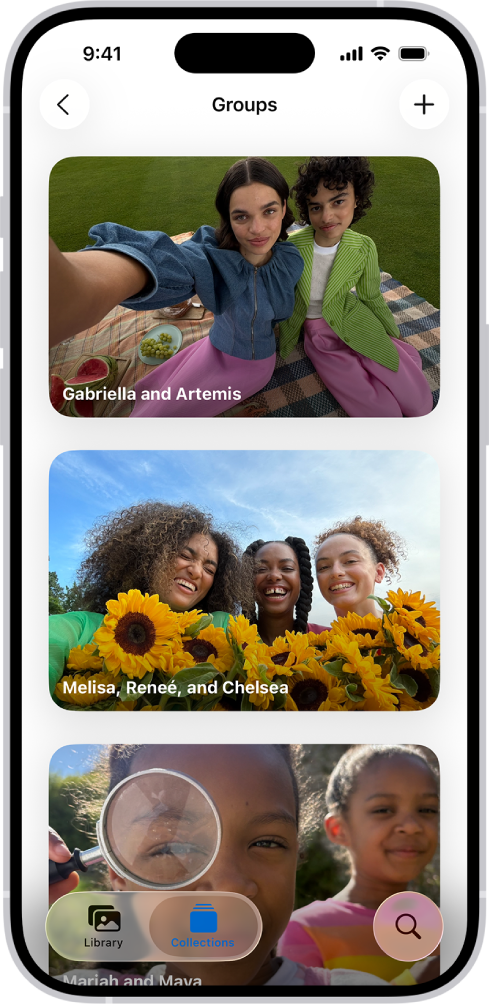
9. Find and identify people in Photos on iPhone

The Photos app on your iPhone recognizes faces in your photos and sorts them in the People album. When you add names to the faces, you can search for photos by a person’s name.

To name a person in a photo, follow the steps below:

  1. Open a photo of the person, then tap the Info button or swipe up to see the photo details.
  2. People identified in the photo appear in the bottom-left corner of the photo. Unnamed people have a question mark next to their picture.
  3. Tap the face of a person with a question mark next to their photo to identify them, then tap Tag with Name.
  4. Type their name, tap Next, then tap Done.

To find photos of a specific person, do either of the following:

  • Tap Albums, tap the People album, then tap the face of a person to see all of the photos they’re in.
  • Tap Search, then enter a person’s name in the search field.

10. Use Visual Lookup in Photos to Identify Landmarks, Plants, and Pets

A cool ‌Photos‌ app trick on your iPhone lets you identify various objects, landmarks, animals, books, plants, works of art, and more in your image library, and then offer information about them that it draws from the web.

This intelligent feature is called Visual Lookup, and the following steps show you how you can use it to get more clued up on the things you’ve taken pictures of with your ‌iPhone‌ through the years.

  1. Start the Photos app on your ‌iPhone‌ and select a picture with a clearly defined subject, such as a flower or animal.
  2. Check the info ("i") icon at the bottom of the screen. If it has a little star over it, tap it – this indicates there’s a Visual Lookup you can examine.
  3. Tap the little icon in the center of the photo to bring up the Lookup search results.

11. Create an iCloud Shared Photo Library

With a Shared Photo Library, you can share your snaps with as many as five other people. You’ll receive suggestions to share group photos that include anyone who’s a member of your shared library. If you do, the shared items pop up in each person’s Photos app, so they’re readily available. Other members can view, edit, favorite, and delete the photos and videos in the shared library, and even add their own.

To set up an iCloud Shared Photo Library, you—and anyone you wish to invite—must be running iOS 16.1 or later.

If you’re not already using iCloud Photos, you’ll need to enable that option. On your iPhone, go to Settings, click on your name, then open iCloud > Photos. Turn on the switch for Sync this iPhone and give your device a moment to sync your photos. The people you invite also must be using iCloud Photos.

To create a Shared Library on your iPhone, follow the steps below:

  1. Go to Settings > Photos.
  2. Select Shared Library and then tap the Get Started button.
  3. Select Add Participants to add people to your library.
  4. Type the name, email address, or phone number of someone you wish to add. You can also tap the icon to access your contacts and choose people from that list. Review the invited participants and then click Add
  5. when you’re ready to proceed. Review the list of people at the Add Participants screen and then tap Next.
  6. You are then asked to choose which photos you want to move into your Shared Library. You can opt to move all your photos and videos, ones chosen by date or people, or ones chosen manually.
  7. To grant people access, you can choose Invite via Messages to send an invite through the Message app. Otherwise, tap Share Link to generate a shareable link to send out to people.

12. Hide Photos on iPhone

Hear me out. We’ve all handed our phone over to someone to show them a few photos before. Maybe you want them to check out your vacation shots, or perhaps you want to show off your new apartment or remodeled bathroom.

But in the back of your mind, you’re hoping, praying they don’t swipe too far through your photo roll. Maybe you’re a bride preparing for your wedding and you don’t want your partner to see your dress. Maybe you’ve taken a photo of a potential birthday gift you don’t want your friend to see. Perhaps you’re embarrassed about the pictures you took of your beagle wearing a tu-tu. Or maybe you’ve got photos of…well, something else entirely.

You can use a neat Photos trick to keep your photos hidden and locked behind a password or Face ID.

  1. Open the Photos app on your iPhone.
  2. Select the photo or video that you need to hide.
  3. Tap the More button , then tap Hide.
  4. Confirm that you want to hide the photo or video.

To unhide photos on iPhone, follow the steps below:

  1. Open the Photos app on your iPhone and tap the Albums tab.
  2. Scroll down and tap Hidden under Utilities.
  3. Use Face ID or Touch ID to unlock your Hidden album.
  4. Tap the photo or video that you want to unhide.
  5. Tap the More button then tap Unhide.

13. Quickly Select Multiple Photos on iPhone

Whether you want to delete a few photos or share a bunch with another app, there are times when you need to select multiple photos on your iPhone at once. This would usually be annoying since you’d have to tap every photo you wanted to select. Stop tapping on each photo individually and try this instead.

  1. Pictures in the Photos app on your iPhone are automatically sorted into collections by year, date, and location. Open the collection you want to select photos from.
  2. Tap Select in the upper-right corner of the screen.
  3. Drag your finger across the photos you want to select. You will see a blue check mark on each one.
  4. Drag down to select an entire row of photos.
  5. Once you’ve selected your photos, you have a couple of options. You can tap Share to share them via a variety of apps (Gmail, iCloud Photo Sharing, Twitter, etc.). This option also lets you print photos or create a slideshow. The Trash Can icon lets you delete photos, while the Add To option lets you place them in an album.

Master the Photos App on iPhone With These Tips and tricks

Now you know some of the best tips and tricks to help you use Photos app on your iPhone efficiently. Hopefully, the tricks we’ve covered introduced you to some iPhone Photos features that you weren’t aware of previously. What are your favorite Photos tips and tricks? Drop a comment and let us know!

Here are our best email tips and tricks to help you get the most out of Apple’s Mail app on your iPhone.

Mail is probably one of the most important apps on your iPhone. You can use it to view and send emails, reply to messages, manage your inbox, and more.

To help you maximize your email productivity, we’ve put together a list of 16 tips and tricks that will help you get the most out of Mail App on your iPhone, and save you valuable time in the process.

Without further ado, here are our best tips and tricks to help you get the most out of Mail app on your iPhone.

Our top 16 best Mail tips and tricks for iPhone

1. Unsend Emails On Mail For iPhone

Have you ever sent an email in haste, only to immediately regret it or realize you’ve said completely the wrong thing? Apparently enough of us have to make Apple add a new Undo Send feature to its Mail app on iPhone.

Thanks to this Apple Mail trick, you now have a grace period to retract an email before it gets sent out. This is nice when you forgot something to include in the email, caught a typo right when you hit send, or perhaps want to change what you wrote, amongst numerous other scenarios where you’d like to unsend an email.

Here’s how to unsend a sent email in the Apple Mail app on iPhone‌:

  1. In the Mail app, if you’ve just sent an email, tap the Undo Send option displayed in blue text at the bottom of the interface in the Mail app. (If the option is not available, your grace period for unsending the email has elapsed.
  2. You will be taken back to the email compose interface, where you can correct any errors in the original email.
  3. Tap the blue arrow when you’re done to send the email.

2. Change Undo Sending Delay On Mail For iPhone

Want to have more (or less) time to unsend an email from Mail app on your iPhone? Well, there’s an Apple Mail trick that lets you change the amount of time that you can undo the sending of an email on iPhone. You’ll have options to turn unsend feature off, 10 seconds, 20 seconds, and 30 seconds.

Many users would benefit from the 30 seconds option, since it gives them a longer period of time to catch a mistake or error and to unsend the email. Here’s where you can make that change:

  1. Start the “Settings” app on your iPhone.
  2. Scroll down and tap on “Mail.”
  3. Locate the Sending section, then tap on “Undo Send Delay.”
  4. Select from one of the following options: Off, 10 seconds, 20 seconds, or 30 seconds.

3. Prevent Emails From Tracking You With Mail Privacy Protection on iPhone

Unsolicited marketing emails will sometimes know whether you’ve opened their email, and if so, when you did so. They can even know where you were at the time, thanks to tracking methods employed by third-party marketing platforms.

To prevent this behavior, Mail Privacy Protection feature on your iPhone hides your IP address and loads all remote content privately in the background, routing it through multiple proxy services and randomly assigning an IP address. Basically, once Mail Privacy Protection feature is enabled on your iPhone, Apple will route your email data through its private servers so that your IP address and personal data aren’t revealed to email marketers.

  1. Start the Settings app on your iPhone.
  2. Scroll down and tap on ”Mail.”
  3. Tap Privacy Protection.
  4. Tap the toggle next to Protect Mail Activity to enable it.

4. Customize The Email Signature on iPhone

By default, every email you send will include the words Sent from my iPhone at the bottom of the message. This is the default email signature for the Mail app. To customize or remove the email signature, follow the steps below:

  1. Start the Settings app on your iPhone.
  2. Scroll down and tap Mail.
  3. Select Signature.

5. Schedule Emails On Mail For iPhone

When you’re ready to send an email that you’ve written, you can schedule a time to send it. It’s simple enough, includes preset options for convenience, and the only requirement is that your iPhone is on at the time you set for the email to be sent. Here’s how you schedule an email for sending later on iPhone.

  1. In the Mail app, compose your email as usual, adding the recipient, sender, subject, and the message contents.
  2. Long press the Send icon (the blue arrow).
  3. Either select one of the preset options that include ”Send Now,” “Send 9:00 PM Tonight,” and “Send 8:00 AM Tomorrow.” If those preset times don’t work for you, you’re able to tap on ”Send Later…” and choose any date or time that you want.
  4. If you opted to Send Later…, use the calendar and time options to schedule when the email should be sent.
  5. Tap Done in the top-right corner of the screen.

6. Use the ‘Follow Up’ Feature On Mail For iPhone

The "Follow Up" feature is designed to move sent email messages to the top of your inbox so you can send a follow-up if you don’t hear back from the person you sent the email to.

This Apple Mail trick is very simple to use, and it can help you to remember to return to certain emails that you otherwise might have forgotten about.

On certain emails in your inbox where you’ve indicated that you’re awaiting a response, you’ll see a ”Follow Up” option. Tapping it will take you to the compose interface with an email addressed to the person that you’re waiting to hear from.

7. Get Email Reminders On Mail For iPhone

If you opened up an email and don’t have the time to respond to it, you can use this Apple Mail trick to make the Mail app to remind you to get back to it later.

Using Remind Me, you can select a date and time for Mail to resurface the message in your inbox, thereby ensuring that you don’t forget about it and nothing goes missing. Here’s how to set up a mail reminder on your iPhone:

  1. In the inbox of the Mail app, tap the email that you’d like to be reminded about later.
  2. Tap the Reply button in the opened email.
  3. Scroll down the options and select Remind Me.
  4. Choose from the pre-set options (Remind Me in 1 Hour, Remind Me Tonight, Remind Me Tomorrow) or tap Remind Me Later… to set a custom date and time to get a reminder to action the email.
  5. Use the calendar and clock to select a date and time, then tap Done.

8. Change Fonts and Formats On Mail For iPhone

This Mail app trick makes it easy to change the formatting of your emails. If you’re composing a new email, tap into the body of your message and tap the arrow icon at the right of the predictive text bar. You will then have a variety of icons that can help you customize your email.

If you tap the Aa icon, you can open the app’s Formatting menu. You will be able to apply attributes like bold, italics, underline, and strikethrough. Tap the small A or large A to make the font bigger or smaller, the circular palette icon to change the color of the text, and Default Font to select a new font.

The formatting menu also allows you to align the current paragraph left, center, or right and add bullets or numbering. You can tap the icon with the right arrow and four horizontal lines to indent the entire paragraph or tap the icon with the left arrow to outdent the paragraph. Indent your current paragraph with vertical quote lines by tapping the icon with three vertical lines, or outdent your current paragraph by tapping the icon with one vertical line.

9. Block a Sender On Mail For iPhone

No longer wish to receive emails from a certain contact? Block them.

  1. Open an unwanted email and tap the name of the sender.
  2. Tap the Block this Contact link.
  3. Tap Block this Contact again in the confirmation message. If you ever change your mind, tap Unblock this Contact.

10. Select Multiple Emails

The Mail app also provides an easy way to select a batch of messages.

  1. Tap the Edit button at the top right of the inbox.
  2. Tap the circle next to the messages you wish to select. You can also select multiple messages by swiping across the circles you wish to select.
  3. Tap Edit > Select All to choose all the messages in the folder.
  4. Once your selections have been made, you can mark, move, or delete/archive all the selected messages in one shot.

11. Search for email in Mail on iPhone

Looking for a specific email on your iPhone? Well, In the Mail app , you can search for emails using different criteria to find the email you want. You’re able to search for text in a message, search according to a certain timeframe, and search by different attributes such as unread emails and flagged emails.

  • Search for text in an email: From a mailbox, swipe down to reveal the search field, tap it, then type the text you’re looking for.
  • Search for emails by date: Type a year, month or specific day in the search field.
  • Find all flagged emails: Enter “flag” in the search field, scroll down, then tap Flagged Messages below Other.
  • Find all unread emails: Enter “unread” in the search field, scroll down, then tap Unread Messages below Other.
  • Find all emails with attachments: Enter “attachment” in the search field, scroll down, then tap Messages with Attachments below Other.

12. Change the Default email Account on Your iPhone

If you do have multiple email accounts logged into your iPhone’s Mail app, the app will automatically choose the one you enter first as the default.

Thankfully, you can easily change your default account to a different email. Here’s how you can change your default email on your iPhone:

  1. Start the Settings app on your iPhone.
  2. Scroll down and tap Mail.
  3. Scroll down again and tap Default Account.
  4. Select the email account you’d like to default to.

13. Shake iPhone to undo trash

This trick is especially useful if you put an email to trash but immediately want it back.

Shake your iPhone from side to side. You will get a pop-up asking you to undo trash. Just hit undo.

14. Convert Emails to PDF Files on iPhone

If you just received a very important email that you want to save, you can keep it as a PDF file on your iPhone using a simple trick. This works with any iPhone, but keep in mind that you won’t be able to access any attached files.

Here’s how you can turn your emails into PDF files:

  1. Start the Mail app on your iPhone.
  2. Tap on the email you want to convert.
  3. Tap on the Reply button at the bottom of your screen (the curved left-pointing arrow).
  4. Scroll down and tap on Print.
  5. Tap on the Share button in the top-left corner of the screen.
  6. Select Save to Files.
  7. Choose a folder where you’d like your PDF file to be saved.

Now you need to go to your Files app, and you’ll be able to open the email as a PDF file. You can also share it or do whatever else you want with it.

The Share button in step 5 only appears in iOS 16 or newer; if you’re running an older iOS version, you’ll need to use two fingers to expand the preview at the bottom of your screen instead, as if you were zooming in on a photo. Then you’ll see the Share button appear at the bottom of the screen.

15. Customize Your Swipe Option

You may have noticed that you can get a bunch of useful buttons just by swiping an email to the left or right. These are your Swipe Options, and you can customize them by doing the following:

  1. Start the Settings app on your iPhone.
  2. Scroll down and tap on Mail.
  3. Scroll down again and select Swipe Options.
  4. Select **Swipe Left **or Swipe Right, depending on which one you want to customize.
  5. Choose the action you want for that particular swipe gesture.

16. Ask Siri to Send Emails for You

One of the coolest Mail tricks on iPhone is to send emails using Siri.

All you need to do is say something like, "Hey, Siri, write an email." Siri will walk you through the process, asking you to whom you want to send the email, what subject line you want to put on it, and then for the text of the message.

After you’re done with that, Siri will ask you if you want to send it. You can either say "send" or "yes," or tap the Send button that appears on your screen. If you say "no," Siri will give you options to change elements of the message, or cancel it if you’ve changed your mind.

You can also dictate an entire email message to Siri in a single sentence. Just say something like, "Hey Siri, send an email to John with the subject hi there and the body are we still on for dinner today."

Master the Mail App on iPhone With These Tips and tricks

Now you know some of the best tips and tricks to help you use Mail app on your iPhone to the fullest. They’re easy to put into practice and you might not have known about them yet! Whats your favorite Apple Mail tips and tricks? Drop a comment and let us know.

If Files app is not working on your iPhone. This troubleshooting guide will help you fix the problem for good!

The Files app on your iPhone lets you view and access files stored on online services, such as iCloud Drive, Box, Dropbox, Google Drive, and Microsoft OneDrive, all in one place. You can also view your files directly on your iPhone or iPad and run a variety of commands on them. If the Files app is crashing, Files app not showing files, Files app missing, or if Files app is not working on your iPhone after iOS 17 update, follow the troubleshooting steps below to get the app back up and running again.

11 Ways to Fix Files App Not Working on iPhone

1. Close Files App On Your iPhone

When Files app is not working on your iPhone, there’s a good chance that the app itself is malfunctioning. Sometimes, closing out of the app and reopening it can fix those minor app glitches.

If your iPhone has a Home button, double-click the Home button to reveal the app switcher, which shows all of the apps currently open on your iPhone. If your iPhone doesn’t have a Home button, swipe up from the very bottom of the screen to the center of the screen. Hold your finger in the center of the screen until the app switcher opens.

Once the app switcher opens, swipe Files up and off the screen. You’ll know it’s closed when it no longer appears in the app switcher.

2. Restart Your iPhone

Believe it or not, a good ol’ reboot seems to fix most software issues and app crashes on iPhone. It’s one of the first troubleshooting methods you should try if your iPhone Files app is not working. Just restart your phone and see if Files app works.

To restart an iPhone with Home button: Press and hold the power button until “slide to power off” shows up on the display. Now drag the red and white power icon from left to right across the display. This will shut your iPhone down.

Wait about 20 seconds to give your iPhone a chance to shut down fully. Then, press and hold the power button again. Release the power button when you see the Apple logo on the center of the display.

To restart an iPhone without Home button: hold down the side button and either volume button together until you see “slide to power off” on the display. Swipe the red and white power icon from left to right to shut down your iPhone. Wait about 20 seconds to allow your iPhone to fully shut down, then press and hold the side button again until you see the Apple logo on the display.

3. Check For An iOS Update

It’s possible an iOS bug is causing issues with Files app. Though running slightly older version of iOS often brings no issues, sometimes Apple also change things server-side, deeming some functions useless. You want to ensure you’re running the latest version of iOS, so head to Settings and check for iOS updates.

Start the Settings app on your iPhone and tap General > Software Update. Tap Download and Install or Install Now if a new iOS update is available.

4. Troubleshoot Your Wi-Fi Connection

Are your files waiting to download? If that’s the case, the problem may not be the app itself, but rather the Wi-Fi network you’re connected to. Follow the troubleshooting steps below to figure out if a Wi-Fi problem is the reason files won’t upload on your iPhone.

Turn Wi-Fi Off And Back On

Turning Wi-Fi off and back on is like turning your iPhone off and back on — it gives your iPhone a fresh start, which can sometimes fix minor software issues.

To turn Wi-Fi off and back on, start the Settings app on your iPhone and tap Wi-Fi. Next, tap the switch next to Wi-Fi to turn it off. You’ll know Wi-Fi is off when the switch turns gray.

Wait about 10 seconds, then tap the switch again to turn it back on. You’ll know Wi-Fi is on again when the switch turns green.

Restart Your Router

Restarting (or rebooting) your router will fix most issues of slow iCloud files downloads and the like. Here is the procedure:

  1. Unplug the router from the power source. If your modem is separate from your router, unplug that as well. Wait 60 seconds.
  2. Plug the modem back to power (if it is separate). Wait another 60 seconds.
  3. Plug the router back to power. Wait 120 seconds.

Now open the Files app on your iPhone to see if the problem is solved.

Try Connecting To A Different Wi-Fi Network

If the iPhone Files app won’t work on your Wi-Fi network, try connecting to a different one. If Files works on one Wi-Fi network, but not the other, then the issue is probably being caused by your Wi-Fi network, not your iPhone.

5. Make Sure The Files App Can Use Cellular Data

iPhone lets you manage apps’ access to cellular data (and check the data usage on iPhone). This means you can allow specific apps to use your cellular data and prevent unnecessary data consumption. Make sure the Files app is allowed to use cellular/ mobile data on your iPhone.

Start the Settings app on your iPhone and tap Mobile/ Cellular. Now, scroll down and ensure that the toggle next to Files is turned on.

6. Check Apple’s System Status

The next troubleshooting step to take when your iPhone Files app is not working is to check that Apple’s systems are all online. Go to Apple’s System Status website and make sure every iCloud-related service has a green circle next to it.

Different shapes in yellow or red mean Apple is experiencing problems with that service. If iCloud is currently unavailable, there’s nothing you can do but wait for Apple to fix the issue.

7. Check For Any New Terms And Conditions

If iCloud is up and running, there may be new terms and conditions for you to agree to before you can use the Files app. Start the Settings app on your iPhone and tap your name at the top of the screen. A popup will prompt you to agree to new terms and conditions if there are any.

8. Make Sure You Are Using The Same Apple ID account

When it’s working, Files syncs everything without any effort from you. That means you can, for example, save a photo to Files app on your iPhone and it will seamlessly sync to your other Apple devices using iCloud drive.

Unfortunately, Files app doesn’t always work seamlessly. If Files don’t sync across devices, go to Settings > [Your Name] on each device and make sure you’re using the exact same Apple ID account. If not, sign in again with the correct details.

Next, go to Settings > [Your Name] > iCloud Show all and turn on each of the services you want to sync.

Now, open the Files app on your iPhone. Can’t see the blue Files app icon on your Home Screen? Just swipe down, then search for the Files app. Next, make a change in the Files app to test whether it syncs to your other devices. Allow 10 minutes or so for iCloud to sync your data.

9. Turn Off/ On iCloud Drive

Many a time, you can troubleshoot issues with Files app on your iPhone by turning iCloud Drive off/ on from the Settings app. Thus, it would be wise to give this nifty solution a try if Files app is not working on your iPhone.

Start the Settings app on your iPhone and tap on your name at the top of the screen. Now, tap iCloud and turn off the “iCloud Drive” toggle on the next page.

Now, restart your device. After your device has rebooted, go back to the iCloud setting and turn on the iCloud Drive toggle. This, should help you fix the iCloud files not downloading on iPhone issue.

10. Sign Out of iCloud and Sign Back Again

If the Files app is still not working, you should sign out of iCloud on your iPhone then sign in again. To do this:

  1. Start the Settings app on your iPhone and tap [Your Name].
  2. Scroll all the way down and tap Sign Out.
  3. If prompted, enter your Apple ID password to Turn Off Find My.
  4. Choose what data to keep on your iPhone—anything you don’t keep is still saved to iCloud—then tap Sign Out.
  5. Return to Settings to sign in again using your Apple ID and password.

11. Reset Network Settings

If your Wi-Fi or cellular network seems to be weak or ill-functioning, it’s a good practice to reset the network settings and it might resolve the problem you are having with the Files app on your iPhone.

When you reset network settings, all of your iPhone’s Wi-Fi, Cellular, APN, and VPN settings will be erased to factory defaults. Before you perform this reset, make sure you’ve written down all of your Wi-Fi passwords! You’ll have to reenter them when you reconnect to your iPhone to Wi-Fi networks.

To reset network settings, open the Settings app and go to General > Transfer or Reset iPhone -> Reset > Reset Network Settings. Enter your passcode and tap Reset Network Settings. Your iPhone will reboot when the reset is complete.

Successfully Fixed zFiles App Not Working on iPhone

You’ve fixed the problem and you can now use the Files app to manage your files on your iPhone. Next time Files app is not working on your iPhone, you’ll know exactly how to solve the problem. Thanks for reading our article, and we hope you’ll share it on social media, or leave us a comment down below if you have any other questions!

If you enter wrong iPad passcode too many times, (more than 5), you will see the “iPad is disabled” message. If you don’t know your passcode, you will have to take steps to unlock your iPad. In this article, we’ll show you all the ways to unlock a disabled iPad without a passcode.

If your iPhone is disabled, see how to unlock a disabled iPhone without iTunes or computer.

There are a few ways you can unlock a disabled iPad, unfortunately — there’s no way to bypass the passcode without factory resetting your iPad.

Thankfully, you can use iTunes ore Finder to reset your disabled iPad to its factory settings and then restore your apps and data from a recent backup.

If you don’t have access to iTunes or Finder, you can restore the disabled iPad to factory settings using Apple’s Find My iPhone web page.

How to decide which method to unlock a disabled iPad

  • If you use Find My and iCloud with your iPad, you should use iCloud to erase, then restore your disabled iPad.
  • If you don’t use iCloud but regularly back up your iPad using Finder or iTunes, you should use that to restore your disabled iPad using a backup.
  • If the first two won’t work for you, you can use recovery mode to factory reset your disabled iPad.

If you don’t use or can’t access iCloud and you don’t have access to a computer, you can take your disabled iPad to an Apple Store or Apple Authorized Service Provider. You can make a reservation for the Apple Store’s Genius Bar.

Unlock a disabled iPad using iCloud

It’s pretty easy to unlock a disable iPad using iCloud. You can access iCloud using most any browser, from a computer or a mobile device.

  1. Using a browser like Safari, Chrome, Edge, etc., navigate to iCloud.com.
  2. Click on the Find My option in the menu of apps.
  3. You may need to reconfirm your sign-in by entering your Apple ID and password. Otherwise, you’ll see a map with all of your current Apple products.
  4. Select All Devices near the top of the page, then select the disabled iPad you need to unlock.
  5. You’ll see three options: Play Sound, Lost Mode, and Erase iPad. You want to click on the last one.
  6. Enter your Apple ID password and your disabled iPad will be erased.
  7. After your iPad restarts, you will be able to set it up as a new device or restore it from an iCloud backup or a backup on your computer using Finder or iTunes.

Unlock a disabled iPad using Finder/iTunes

If you have a Mac running Catalina or later, you can use Finder to unlock a disabled iPad. If you are using a Mac running Mohave or earlier or you are using a PC, you can use iTunes to unlock your disabled iPad.

Unlock your disabled iPad using Finder

  1. Connect your iPad to your Mac using the appropriate USB cable.
  2. If asked, trust the computer.
  3. Open Finder.
  4. Find your iPad in the left sidebar and click on it.
  5. Click on Restore Backup, then choose your most recent backup.
  6. Click on Restore.
  7. Wait for the process to finish before disconnecting your iPad.

Unlock your disabled iPad using iTunes

  1. Connect your iPad to the computer using the appropriate USB cable.
  2. If iTunes doesn’t launch, open it.
  3. Find a button that looks like your iPad and click it.
  4. Click on Summary, then click on Restore iPad. Restore erases your iPad.
  5. Follow onscreen instructions. After your iPad has been restored (factory reset), you can restore from an iTunes or iCloud backup.

Unlock disabled iPad using Recovery Mode

Recovery Mode uses a computer to restore your disabled iPad.

Turn off your iPad

  1. If you are using a PC, make sure that iTunes is installed on the computer.
  2. With your iPad not yet connected to the computer, turn off your iPad. iPad with Face ID: Press and hold both the top and volume down buttons. When you see the power off slider, slide it to the right to power off. iPad with Home button: Press and hold the top button until you see the power off slider on the display. Slide the power off slider to turn off.

Connect your iPad to the computer

  1. After your iPad has powered off, you are going to press and hold one of the buttons while you connect your iPad to the computer. So have the cable already connected to the computer, ready to connect to your iPad.
  2. The button you will use depends on your iPad model. iPad with Face ID: You will use the Top button. iPad with Home button: You will use the Home button.
  3. Now, press and hold the appropriate button while quickly connecting your iPad to the computer. Don’t let go of the button until the recovery mode screen appears on your iPad.

Restore your iPad in Finder or iTunes

  1. On the computer, open iTunes (PC or Mac running Mohave or earlier) or Finder. Click on your iPad. In Finder: Your iPad should be listed in the left sidebar. In iTunes: Your iPad should appear as a button near the top.
  2. You should see a popup with the options Update, Restore or Cancel. Choose Restore.
  3. The process should take a few minutes to complete. If it fails — it takes too long, and your iPad exits the recovery screen — start over from the beginning.
  4. Once the process finishes, you can disconnect your iPad and set it up as new.

Keep your iPad Air running longer on a single charge with these battery-saving tips.

Apple’s iPad Air lineup is known for its battery life. They tend to offer excellent battery life, with all models promising 10 hours of usage as per Apple. However, there are a lot of terms and conditions attached here, and if you are looking to extend the battery life of your iPad Air, follow this guide.

As a user, you can tweak some of the settings in iPadOS to get maximum juice out of your iPad Air battery. In this post, we will talk about the best battery saving tips and tricks to extend the endurance time of your iPad Air.

The battery saving tips explained in this article apply to the following iPad Air Models:

  • Fifth Generation: 10.9-inch iPad Air released in 2022.
  • Fourth Generation: 10.9-inch iPad Air released in 2020.
  • Third Generation: 10.5-inch iPad Air released in 2019.
  • Second Generation: 9.7-inch iPad Air 2 released in 2014.

Improve iPad Air Battery Life With These Tips and Tricks

1. Reduce screen brightness

It may seem convenient to have your brightness on max, especially when you’re outside, but this can cause your iPad Air battery to drain faster. Turning the brightness down on your iPad Air can certainly help when it comes to extending the battery life.

To adjust screen brightness on your iPad, swipe up to open the Control Center and use the slider on the right to lower your screen brightness. You can also go to Settings > Display & Brightness to adjust the brightness. Also on this settings page is a toggle switch for Auto-Brightness. Unless you are frequently using your iPad Air at the beach or in other brightly lit environments, turn on Auto-Brightness, which adjusts the screen level based on ambient light.

2. Turn off Wi-Fi and Bluetooth when not in use

It might seem like a no-brainer to keep your Wi-Fi or data activated at all hours so that you can keep connected day and night. But this can significantly drain your iPad Air battery, as you constantly get notifications, background updates, and more when you don’t necessarily need them.

A Wi-Fi connection consumes less energy than a cellular connection, so use it when you can. But Wi-Fi consumes power, even if you are not using it to connect to a network, so you should consider turning it off when you are not online. During your sleeping hours is a great time to switch off your Wi-Fi.

Similarly, while using your iPad Air, you might have connected your headphones, keyboard or speakers to it using Bluetooth. Most users forget to turn off the option after completing the work. Unnecessarily keeping your Bluetooth on can impact the battery life on the iPad Air. Consider switching it off when you aren’t using it to conserve battery.

Both Bluetooth and Wi-Fi can be also toggled on and off by swiping up from the bottom edge of your iPad Air’s screen for the Control Center.

3. Turn off AirDrop

AirDrop is a feature that lets you shuttle files among your iOS devices or between your iPhone or iPad Air and your Mac. It’s super simple to use but, like fellow wireless technologies Bluetooth and Wi-Fi, it can also drain your battery even when you aren’t transferring files. Unless you are using AirDrop to transfer files regularly, why not keep it turned off until you need to use it? To do so, swipe up for the Control Center, tap AirDrop and then tap Receiving Off.

4. Turn off Handoff

I don’t need to answer phone calls on my iPad Air and I rarely use it to finish an email or text I started on my iPhone or Mac (or vice versa). Because I use my iPad Air for different things than my iPhone or Mac, I don’t need Handoff to share activities between these very different devices. If this also describes you, then you can save a bit of battery life by disabling Handoff, another wireless technology that is using battery resources in the background to search for compatible devices even when you aren’t actively using it. To disable Handoff, go to Settings > General > Handoff and toggle off the feature.

5. Don’t push, fetch less

If your iPad Air isn’t your primary device for checking email, you don’t need to have new messages constantly pushed to the device or have it frequently fetch new messages. Check your mail settings to make sure push is turned off and fetch set to Manually, or, if you must, Hourly. You can adjust Push and Fetch settings by following this path: Settings > Mail, Contacts, Calendars > Fetch New Data.

You can select to have data fetched for your iCloud account and any email accounts you set up with the Mail app. Choose Fetch or Manual for these accounts, and then select the frequency with which you’d like to fetch data.

6. Reduce Background App Activity

Next on our list is limiting background app activities on your iPad Air. Background apps essentially function even when you’re not directly using them. Examples include VPN, Maps, health, and calendar apps. These apps monitor or control certain aspects of your phone without you intervening, which, while convenient, causes your iPad Air battery to drain faster.

What’s more, you probably don’t need a good number of these apps to be working in the background. So, how can you reduce background app activity?

Head to Settings > General > Background App Refresh and you can turn Background App Refresh off entirely or select which apps you’d like to refresh in the background.

7. Keep an eye on location services

Many people claim you should force-quit out of apps, say, each night before bed. I’m lucky if I get all the dishes cleaned up before hitting the sack, so I certainly don’t have the time or the energy to be closing iPad Air apps on a regular basis. Plus, it has not been definitively proven to me that apps running in the background drain battery life to any great extent. I will, however, force-close Google Maps or any other GPS app, since these do seem to drain the iPad Air’s battery.

There are a huge number of apps that can track your location. While you may think these apps solely track your location when you’re directly using them, this isn’t always the case. This constant location monitoring requires energy and can take a toll on your iPad Air battery life.

To keep tabs on which of your apps are using location services. Go to Settings > Privacy & Security > Location Services to adjust which apps are requesting your location.

To kill four wireless birds — cellular, Wi-Fi, Bluetooth and GPS — with one stone, simply turn on Airplane Mode from the top option listed in Settings or from the Control Center.

8. No more notifications

When you install a new app on your iPad Air, the chances are that its notification settings will be automatically activated. But you don’t necessarily need to receive notifications from every app you have, and doing so can have a detrimental effect on the length of your iPad Air battery life. Notifications also wake up an idle iPad Air and turn on the display, which consumes battery power. So, you can deactivate notifications for certain apps to help mitigate battery loss. Go to Settings > Notifications and choose which apps can push notifications your way.

9. See which apps are battery hogs

On the iPad Air, the Battery page in settings is useful because it shows you which apps have used the most battery resources in the last 24 hours and the last seven days. If your iPad Air is running through battery life at a disturbingly fast pace, check here to see which apps are the cause and then quit using those apps until you can charge your iPad Air.

10. Quick trigger for Auto-Lock

Why let an idle iPad Air run down your battery? With Auto-Lock, your iPad Air will shut down after it has been inactive for a period of time. You can set it as short as 2 minutes. To set a time period for Auto-Lock, head to Settings > Display & Brightness > Auto-Lock.

11. Climate control

Excess heat can affect battery life. Apple recommends keeping your iPad Air between 32 and 95 degrees Fahrenheit, and points to the range of 62 to 72 degrees as the comfort zone. This means keep your iPad Air in the shade at the beach, out of locked cars in the summer, and off of heaters in the winter.

Also, if you have a case that envelopes your iPad Air and can cause it to heat up when it’s charging, remove your iPad Air from the case before charging it.

12. Update Your iPad Air to the Latest Software

Apple occasionally releases iPadOS updates to keep the iPad smooth and glitch-free. Alongside, Apple also adds some battery-related features to increase the life span of the iPad Air battery. With that in mind, it’s always advisable to keep your iPadOS up to date. Go to Settings > General > Software Update to check if an update is available for your iPad Air.

Say Goodbye to a Flat iPad Air Battery With These Power-Saving Tips

It’s always a pain to have your iPad Air die unexpectedly, but with the above-mentioned tips and tricks, you will see an improvement in iPad Air battery life.

If you’re watching full HD movies with the brightness turned all the way up, or you’re performing power intensive tasks like gaming, your iPad Air is still going to die on you in a few hours. But in general use, the above tips should help you get more juice out of your iPad Air.

See also:

Maintain your iPads battery health with these charging tips.

When you buy a new iPad, you most certainly get the advertised battery life. However, as time passes, your iPad’s battery health will slowly but surely deteriorate.

Battery degradation is natural to lithium-ion batteries used in iPads, smartphones, and most gadgets. Hence, there’s no way to keep your iPad’s battery 100% healthy.

However, you can maintain your iPad’s battery health by adopting optimal charging habits. In this article, we’ll discuss the best charging tips you should embrace to maintain your iPad’s battery health.

1. Don’t Fully Charge or Drain Your iPad’s Battery

As we’ve pointed out above, iPads use lithium-ion batteries, which usually reduce capacity as you continue charging and discharging your device. With each complete charge cycle, the maximum charging capacity of the battery slightly reduces.

Lithium-ion batteries take a big hit if you fully charge them as it makes them susceptible to overheating, which in turn reduces their lifespan. This is why you may have noticed that your iPad’s battery charges faster from 0 to 80%, then enters the slow charging phase from 80% to 100%.

Conversely, fully discharging lithium-ion batteries is just as bad, and hence, Battery University recommends that you keep your charge between 30% and 80% for maximum battery life.

2. Use Apple’s Official Charger

This might seem like a no-brainer, but it’s always worth mentioning. When you buy a new iPad, Apple always includes a power adapter and a USB-C charging cable. Using an official power adapter and charging cable is always recommended because they are optimized to ensure your battery’s long-term health.

And it’s not just about maintaining iPad battery health. An official iPad charger is also safer to use. However, it’s worth mentioning that there are some excellent third-party iPad chargers that you can use.

Just avoid cheap third-party iPad chargers from no-name brands, as they can be bad for long-term battery health and might be a safety risk, too. If you’re going to buy a charger, we recommend getting one made by Apple. If not, then get one from reputable accessory makers like Anker, Satechi, or Belkin.

Apple even sells select accessories from third-party companies on its website, so you can use that as a benchmark on which third-party chargers are the best.

3. Enable Optimized Battery Charging

Optimized Battery Charging is a feature available on your iPad that learns your daily charging routine and optimizes charging to help extend battery life. The feature is meant to reduce your battery’s wear and tear.

It does so by delaying charging your battery past 80% if it predicts that you will have your iPad plugged in for a long time. At the same time, the feature also ensures that you’ll have your battery charged by the time you unplug the charger.

You can enable Optimized Battery Charging in iPadOS from Settings. open the Settings app and select Battery > Battery Health > Optimized Battery Charging. Toggle on the feature.

As alluded to before, keeping your battery level between 30% and 80% is the best way to maintain iPad battery health. But, Optimized Battery Charging doesn’t stop your battery from charging past 80%. It only delays it, and keeping tabs on your battery levels.

4. Don’t Leave Your iPad Plugged In Overnight

Having your iPad plugged in overnight is common. Most of us are guilty of this, but iPads are not meant to be plugged in overnight. As noted before, charging your battery to 100% may cause overheating, negatively impacting your iPad’s battery life in the long run. You should, therefore, avoid having your iPad plugged in overnight.

5. Half-Charge Your iPad for Long-Term Storage

If, for some reason, you want to put away your iPad for some time, you need to control the environmental temperature and the battery percentage. These two will affect battery life while your iPad is in storage.

Apple recommends charging your iPad’s battery to about 50% if you need to store it long-term to maintain battery health.

The 50% recommended level is because if you fully charge your battery and store it for an extended period, it may lose some capacity, affecting the battery life. And if you leave it fully discharged for an extended time, Apple says, “the battery could fall into a deep discharge state, which renders it incapable of holding a charge.”

Excess heat can affect battery health. Apple recommends keeping your iPad between 32 and 95 degrees Fahrenheit, and points to the range of 62 to 72 degrees as the comfort zone. This means keep your iPad in the shade at the beach, out of locked cars in the summer, and off of heaters in the winter. Additionally, you should recharged your iPad to 50 percent every six months (in case you’re storing your device for more than six months). You should also shut down your iPad if you want to keep it for an extended period without use.

6. Charge Your iPad at Moderate Ambient Temperatures

Heat is the biggest enemy of all kinds of batteries. According to Battery University, extreme care has to be taken when charging lithium-ion batteries because of the delicate nature of the process.

Furthermore, Apple says charging your device in high ambient temperatures can damage battery capacity. According to the company, the sweet spot lies between 50 to 95 degrees F.

Also, if you have a case that envelopes your iPad and can cause it to heat up when it’s charging, remove your iPad from the case before charging it.

Use These Charging Tips to Maintain Your iPad’s Battery Health

While batteries can’t last forever, you can at least take good care of them to avoid replacement sooner than required. Besides, replacing a iPad’s battery is costly; it will set you back by at least $99 for regular iPad models and about $199 for iPad Pro models, according to Apple. But by following the tips highlighted, you can make your iPad’s battery last longer.