

Got a tip for us?

If your iPhone 14 Pro Max isn’t connecting to Wi-Fi properly, here are the troubleshooting steps to fix the issue.

Since you need a network connection to make the most of your iPhone, it’s frustrating when your iPhone 14 Pro Max won’t connect to Wi-Fi. You’ll instead have to use your cellular data plan, which might be limited. Thankfully, there are a number of solutions you can try if your iPhone 14 Pro Max won’t connect to Wi-Fi.

  • If your iPhone 14 Pro Max won’t connect to Wi-Fi, you should first make sure that your phone isn’t on Airplane Mode, and that Wi-Fi is enabled on your phone.
  • If your iPhone 14 Pro Max is connected to Wi-Fi but no internet access, you can try forgetting the Wi-Fi network and then connecting to it again.
  • If all else fails, you can try resetting your iPhone’s network settings.

Let’s discuss the steps to fix the problem of iPhone 14 Pro Max not connecting to Wi-Fi in more details.

1. Make sure that Wi-Fi is enabled

The first troubleshooting step is to check to see if the Wi-Fi network you want to connect to is within range and already connected. Simply go to the Settings app on your iPhone.

On this screen, make sure your iPhone is not in Airplane Mode which cuts off all your phone’s external connections.

Because of this, toggling airplane mode on and back off can be a helpful troubleshooting step when your iPhone 14 Pro Max won’t connect to Wi-Fi. Try this before moving to other solutions, and make sure airplane mode is off going forward.

You should also check that your iPhone’s Wi-Fi sensors are turned on. Make sure the Wi-Fi slider at the top is green, which means the feature is enabled. Below this, when everything is working, you’ll see the name of your network with a checkmark next to it, showing that you’re connected.

If this doesn’t appear, tap the name of the network you want to connect to in the Other Networks list below to connect to it. If you don’t see the network here, make sure that you are within range of the Wi-Fi network.

The exact distance that Wi-Fi covers will vary based on your router, but you should be as close to your router as possible to ensure a strong signal. If you know you’re close and still don’t see your Wi-Fi network, or it doesn’t connect when you tap it, you’ll need to continue to additional troubleshooting.

2. Reboot Your iPhone and Router

If you find your iPhone 14 Pro Max not connecting to Wi-Fi after trying the above steps, you should take a key troubleshooting step to get rid of any minor glitch. Try to restart your iPhone and router.

You can easily restart your iPhone by going to Settings > General > Shut Down.

If your router has a physical power button, turn it off for about 30 seconds. If your router doesn’t have a power button, unplug it from the power source instead.

Once both devices have rebooted, go to Settings > Wi-Fi and tap your network name again. In case it doesn’t connect, we’ll walk you through the next steps.

If your iPhone 14 Pro Max doesn’t show Wi-Fi and it’s your home network, make sure that your network isn’t hidden. Also, confirm that your router is plugged in and the lights on your modem and router aren’t flashing red or similar. If you’re trying to connect to a public network that won’t appear, speak to its administrator.

3. Forget and join the Network Again

If your iPhone 14 Pro Max doesn’t connect to Wi-Fi after trying the above step, press the blue i icon next to your network’s name. On the next page, tap Forget This Network, which will remove the saved Wi-Fi password and require you to manually add it again.

Now go to the Wi-Fi screen and select your network and enter its password. Your iPhone 14 Pro Max should connect to Wi-Fi with the correct password. But if the password doesn’t work, whoever administers the network might have recently changed it.

For networks where you’re in charge, you can log into your router to view the password and change it, if needed. For networks that aren’t your own, you’ll need to ask the owner to confirm the password. Make sure that you type the password carefully, and don’t confuse characters like “1” and “l”.

In case this step solved your issue, it’s a good idea to enable the Auto-Join slider on the network’s options page. With this on, your iPhone 14 Pro Max will automatically connect to your Wi-Fi network when within range.

4. Look for a Login Page (for Public Wi-Fi)

Many of these steps assume that your iPhone 14 Pro Max won’t connect to Wi-Fi at home. But when you’re trying to get online on a public network, like those at an airport or hotel, there’s often an extra step you have to complete before you can get online.

Once you’ve connected to a public network, open Safari or another browser and try to visit any website. You should be brought to a sign-in page, where you’ll be required to tap a button to confirm that you agree to the network’s terms of service.

After you do this, the Wi-Fi network should work properly, though keep in mind that some functions, like games and media streaming, may still be blocked on that network.

5. Check Your Wi-Fi Network for Issues

Even once your iPhone 14 Pro Max is connected to Wi-Fi, you might still have issues with the network not letting you get online. On the Wi-Fi menu, you’ll see a message like No Internet Connection underneath your network name when there’s an issue. Tap the network to reveal more details about the problem.

If an error appears here, it almost certainly affects your whole network, so other devices won’t be able to get online either. Try getting online with another device, like an iPad or a laptop, to confirm this.

If restarting your router doesn’t fix the issue, the root cause could be a bad cable, incorrect router setting, or ISP outage.

6. Update your iPhone and router

While a software update isn’t likely to fix iPhone 14 Pro Max not connecting to Wi-Fi issue, it’s worth giving it a try if you’ve reached this point. You can update your iPhone by going to Settings > General > Software Update.

Then, update your router. The instructions for doing this vary by device, so try a Google search for your model, or consulting the manufacturers documentation, for help.

7. Check VPN

Sometimes, you might have a VPN installed to protect your network by, for example, hiding your IP address. However, it just might be what’s preventing your iPhone 14 Pro max from connecting to internet.

Go to settings and make sure VPN is disconnected to ensure that it’s not the source of the network problems and check if the issue persists.

8. Try Connecting to Another Wi-Fi Network and Reset Network Settings

If you are still experiencing the problem of iPhone 14 Pro Max not connecting to Wi-Fi, connecting your iOS device to another Wi-Fi network will help you figure out where the problem lies. If you’re able to connect to Wi-Fi successfully at a friend’s house or a coffee shop, then the problem is with your home network. But if your iPhone 14 Pro Max won’t connect to Wi-Fi anywhere, then something on your device is the problem.

You can troubleshoot possible network glitches by going to Settings > General > Transfer or Reset iPhone > Reset > Reset Network Settings. This will return all network-related settings on your iPhone, including Wi-Fi, Bluetooth, APN, and any VPNs, back to their factory default. It’s a bit of a pain to set everything back up, but it’s the final troubleshooting step to eliminate network problems on your iPhone 14 Pro Max.

If your iPhone 14 Pro Max still won’t connect to any Wi-Fi networks after resetting network settings, you should reach out to Apple Support. Your phone is likely suffering from a hardware problem.

iPhone 14 Pro Max Won’t Connect to Wi-Fi? Problem Fixed

You don’t have to worry when your iPhone 14 Pro Max isn’t connecting to Wi-Fi. The problem usually lies with a minor glitch on your device or is network-wide, so there’s probably nothing wrong with your iPhone. By following these troubleshooting steps, you can get your iPhone 14 Pro Max connected back to Wi-Fi in no time.

If your iPhone 14 Pro Max wireless charging is not working, here are the best tips to fix the problem.

Inductive wireless charging is a way to charge your phone without any pesky cables. Qi is the wireless charging standard that most companies share for compatibility. All you have to do is plug in the charging pad and place your iPhone on top.

The process uses electromagnetic induction to charge your iPhone’s battery. This involves a very flat series of coils inside the charging pad. The electromagnetic field generated by the pad sends power to your phone in order to charge the battery.

Although Wireless charging technology is a big selling point for Apple, it can also be problematic at times. Here are a few fixes you can try if wireless charging isn’t working on your iPhone 14 Pro Max.

Note: information in this article apply to iPhone 14, iPhone 14 Plus, iPhone 14 Pro and iPhone 14 Pro Max.

Fix iPhone 14 Pro Max wireless charging not working

Charge your iPhone with a different charger

First, make sure that you can charge your iPhone with the normal charging cable that came with your iPhone to rule out general charging issues. Though wireless charging and wired charging don’t work the same, at least you can find out if the display of charging is typical or not.

Check whether the charging pad is properly connected to the socket

Make sure you’re using a high-quality, Qi-enabled accessory — and make sure it’s plugged in.
This may sound like a “no duh” suggestion, but it’s something to check before trying any other Troubleshooting step. Make sure that your Qi wireless charger is plugged into an outlet or power strip that’s working.

Make sure you’re using a Qi-certified charger

Apple uses Qi standard for its wireless charging, so make sure you’re using a Qi-certified charger from a reputable brand. Wireless chargers that don’t support Qi, or shoddy options from sketchy companies, may not work with your iPhone 14 Pro Max.

Have a look at the USB port for any dirt particles

If there is a charging port between the power cable and the charging mat, try cleaning out the charging port with a Q-tip and see if the charging mat works better.

Restart your iPhone

When in doubt, restart your iPhone.
In many cases, glitchy or buggy behavior can be easily rectified by a simple restart. That’s the case for the iPhone’s wireless charging feature, too. If you’re running into problems wirelessly charging your iPhone 14 Pro Max, you may want to power down your phone or perform a force restart.

To restart your iPhone, go to Settings > General > shut down.

To force restart your iPhone, press and quickly release the Volume Up button. Press and quickly release the Volume Down button. Then press and hold the Side button until you see the Apple logo on your screen.

When your device has restarted, try charging it. Most of the time, this technique should solve iPhone 14 Pro Max wireless charging problem.

Ensure your iOS is up to date

Apple routinely patches software bugs that could inhibit wireless charging. Even if you aren’t actively experiencing charging issues on your iPhone 14 Pro Max, you’ll want to install the latest available software whenever you can.

To download and install the latest iOS updates, head to Settings > General > software update. Once you’re done updating, try to charge again. If it works, awesome. If not, try the next solution.

Try removing any device accessories before charging

Try removing your case, skin, or other accessories on your iPhone. Do not place metal objects, magnets or RFID cards, holders or credit cards in between your device and the wireless charger. These may block wireless signals or cause overheating.

Be mindful of iPhone placement on the wireless charger

How you place your iPhone on a wireless charger is, arguably, the most important thing you’ll want to keep in mind when using Qi-based solutions.

To put it in layman’s terms, Qi uses a charging coil to wirelessly transfer energy to your device. But these coils can be finicky. The most common reason wireless charging is not working on iPhone 14 Pro Max is improper placement on the charging pad. The wireless connection between the device and the charging pad may be interrupted, cutting off the power supply.

If the iPhone is too far away from the charging coil, then charging speeds may end up being ridiculously slow. Similarly, if the coil and iPhone aren’t aligned properly, charging may not take place at all. Worse still, you may even get a charging ”ping” or see the charging indicator working normally — even if your iPhone 14 Pro is not charging. More likely than not, this is why many users wake up to half-charged devices. Check that your device is placed directly in the centre of the pad, without any obstructions.

DFU Restore Your iPhone

If you are still experiencing a problem of your iPhone 14 Pro Max not charging wirelessly and you suspect it could still be a software bug, then you may want to perform a DFU Restore. This is one of the deepest “resets” you can carry out on an iPhone.

Steps to Doing a DFU Restore

  1. Make sure you have a valid backup in iTunes.
  2. Using an USB cable, connect your iPhone to the PC with iTunes installed.
  3. Press Volume up and release.
  4. Press Volume down and release.
  5. Press and continue holding the Side button for 10 seconds.
  6. While still holding the side button, press and hold the Volume down button for 5 seconds.
  7. Release the Side button and continue holding the Volume down button for an additional 10 seconds.

When you successfully enter DFU mode, your iPhone should remain on a black screen, (if not start the process again from the beginning.)

My iPhone 14 Pro Still Won’t Wirelessly Charge!

If you’re still running into problems with wireless charging on your iPhone 14 Pro Max, there may be a damaged component or hardware issue with your device. Try a different wireless charger unit to see if it works; otherwise, we recommend taking your iPhone to an Apple Store or Apple Authorized Service Provider so they can diagnose and fix the problem.

iPhone 14 Pro Max not charging wirelessly? Fixed!

Your iPhone 14 Pro Max is charging wirelessly again. You now know exactly what to do when your iPhone 14 won’t wirelessly charge. Now share this article with your friends and family to teach them what to do when their iPhone 14 Pro Max is not charging wirelessly. Feel free to leave any other questions you have in the comments section below!

Is your iPhone 14 Pro not finding Bluetooth devices? If so, this problem can be resolved with a simple troubleshooting step or two. Below I will explain a few possible fixes for iPhone 14 Pro not discovering Bluetooth issue.

You want to pair or connect a Bluetooth speaker, car stereo, headphones or something else to your iPhone 14 Pro, however, something isn’t working right, and your iPhone 14 Pro is not finding Bluetooth devices. Whether it’s your brand new iPhone 14, iPhone 14 Pro, iPhone 14 Plus or iPhone 14 Pro Max, there’s a lot you can do to troubleshoot before reaching out to Apple or Bluetooth device manufacturer. Sure, sometimes there’s an issue with your headset, speaker, or in-car infotainment system, but often enough it’s a software issue that a few simple steps can fix. If so, follow along and we’ll get you back up and connected in no time!

Turn Bluetooth off and on

The first solution is simple. Just turn Bluetooth off and back on. To do this, head over to Settings > Bluetooth and turn the switch off and back on.

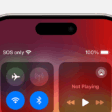
You can also swipe down from the upper right hand corner of your screen to bring up the Control Centre and tap on the Bluetooth button to toggle it off and on. This resets all your Bluetooth connections and might fix the problem. You may have to manually tap on each device to connect it after performing this step.

Restart your iPhone and/or Bluetooth device

Sometimes, all it takes is restarting your iPhone Bluetooth device, or both to resolve this problem. Go to Settings > General > Shut Down and drag the power off slider to turn off your iPhone. Hold the button down again to turn it back on. Consult the manual for your Bluetooth device to figure out how to turn it off and back on. Restarting forces everything to load from scratch which often fixes strange issues in the software.

Force restart iPhone

The next thing to try if your iPhone 14 Pro is not finding Bluetooth devices is to force restart your phone. You can force reboot your iPhone 14 Pro by following the steps below:

Press and quickly release the Volume Up button. Press and quickly release the Volume Down button. Then press and hold the Side button until you see the Apple Logo.

Charge and move closer

Sometimes, it helps to fully charge both devices. Also, move your iPhone 14 Pro closer the device you’re trying to pair or connect to. These simple things can fix the Bluetooth issues you are experiencing.

Make sure your Bluetooth device is discoverable

One of the reason why your iPhone 14 Pro is not finding Bluetooth is because the device’s own Bluetooth is switched off, or isn’t in pairing mode.
Check the manufacturere’s documentation to find out how to make it discoverable by turning on pairing mode. With some headphones, it’s a case of holding the power button down for longer, but with other devices there’s a dedicated Bluetooth button.
Some of the most frustrating devices have to be completely reset before they’ll be discoverable again.

Make sure your iPhone is discoverable

Even if Bluetooth is turned on, your iPhone 14 Pro itself might not be ‘discoverable’. This means that a Bluetooth device you haven’t yet paired cannot see your iPhone 14 Pro.

To make it visible to other devices, open the main Bluetooth settings. Your iPhone 14 Pro will be discoverable when Bluetooth is turned on. It will search for Bluetooth devices available for pairing when you go to Settings > Bluetooth.

Try re-pairing

Sometimes the easiest solution when you’re having the problem of iPhone 14 Pro not discovering Bluetooth devices is to forget your device and pair it again. You can do this by going to Settings > Bluetooth and select the more icon next to your Bluetooth device. From this screen, select forget this device. Once this is done, put your Bluetooth device in pairing mode and pair it to your device again.

Install the Latest iOS Update

If you are still experiencing the problem of iPhone 14 Pro not finding Bluetooth devices, try updating iOS to the latest version. Updating the operating systems to the latest version often fixes bugs, and your iPhone 14 Pro Bluetooth issue might be resolved with the updates. You can update iOS by going to Settings > General > Software Update. The system will check for software updates and if any are found, you will be notified. Choose the download and install button and connect your device to a power source to prevent the battery from dying while the update is installing. Your device will download the update, prepare it, and then reboot to install it. Wait until your device reboots. Check your Bluetooth device and confirm everything is working as expected.

Broken Bluetooth?

It’s rare, but not impossible, for the issue to be that Bluetooth isn’t working properly or at all on your iPhone 14 Pro. If you find that the Bluetooth toggle is greyed out in the iPhone’s settings, then you know the reason why your iPhone 14 Pro is not discovering Bluetooth devices. Check the last solution on this article.

Reset Network Settings

If you find your iPhone 14 Pro not discovering Bluetooth devices after trying the above steps, try to reset network settings. But beware: along with completely wiping all Bluetooth information on your iPhone, this will erase other network settings including known Wi-Fi networks and VPN configurations.

You can do this by going to Settings > General > Transfer or Reset iPhone > Reset. On that page, select Reset Network Settings and type in your passcode. Then your iPhone will turn off and restart. After that, check if your iPhone 14 Pro can find Bluetooth devices. If your problem still isn’t solved, move to the next solution.

Reset the Bluetooth Accessory

Are you still facing the problem of iPhone 14 Pro not recognizing Bluetooth devices? Don’t worry, the problem could be with your Bluetooth accessory. So, try resetting the Bluetooth device. Keep in mind, the process varies from one device to the other. Therefore, take the help of the user manual or contact the manufacturer for help if you don’t know how to reset the device.

Restore and Setup as new iPhone

This is not ideal, but if you find your iPhone 14 Pro not discovering Bluetooth devices after trying the above tips, the last resort is to restore your iPhone via iTunes or Finder in macOS Catalina/Big Sur and set it up as a new device. This way, you start afresh and get rid of possibly problematic customizations and settings on your device.

Visit an Apple Store

If none of the tricks are working for you then it’s a trip to the nearest Apple Store. Your iPhone 14 Pro might be having an hardware issue.

iPhone 14 Pro not discovering Bluetooth devices: Fixed!

While it’s never fun to troubleshoot, hopefully these fixes will help get your iPhone 14 Pro finding Bluetooth devices again. Which trick helped you to resolve the issue? Drop a comment and let us know.

Charging your iPhone 14 Pro Max quickly isn’t as simple as just plugging it in. Learn these tips and tricks to charge your iPhone 14 Pro Max faster.

Is there anything worse than waiting for your iPhone 14 Pro Max to charge when you have somewhere to be? Even if you’re doing all that you can to make your iPhone 14 Pro Max battery last longer, it’ll eventually hit zero and you’ll need to wait around for it to charge.

While waiting for your iPhone to charge can feel like forever, that seemingly long charge time isn’t entirely psychological. There’s no magic trick that will have your phone’s battery going from zero to 100 percent in 10 minutes, but there are a few things you can do to charge your iPhone 14 Pro Max faster.

Without further ado, here are helpful tips on how to charge iPhone 14 Pro Max faster:

1. Use a Wall Socket to charge your iPhone 14 Pro Max faster

Using a USB port on your computer or in your car leads to a much more inefficient charging experience.

There’s nothing wrong with receiving a lower amperage—it won’t damage your iPhone—but you’ll definitely be twiddling your thumbs for a lot longer.

As a rule of thumb, only use your car or computer for a top-up, not for a full charge.

2. Avoid Wireless Charging

Wireless charging is amazing it’s very convenient, and it entails fewer cables, which is something I’m sure we can all get on board with.

However, if you want to charge your iPhone 14 Pro Max faster, you should avoid it. It offers a considerably slower charging experience than its wired counterpart. In fact, testing suggests it could be as much as 50% slower.

Why? There are two reasons. First, it’s more efficient to transfer energy through a cable than via simple contact. Second, the wasted energy manifests itself as excess heat.

3. Use a fast charger

The iPhone 14 Pro Max supports “fast charging,” which should take your device from zero to about 50 percent battery in around 30 minutes.

That sounds lovely, but Apple has never included a charger with a high enough wattage to support fast charging. That free charger from your older model is probably a slow 5W one and you need at least a 20W charger to fast charge your iPhone 14 Pro Max. And Apple doesn’t even include a charger with its iPhones anymore.

A higher wattage charger will charge your iPhone a lot faster, but know that there’s a limit. It’s not like you can simply buy a 100W charger and juice up your iPhone in a handful of minutes. For example, the iPhone 14 Pro Max has a charging ceiling of 27W; it won’t charge faster than that with a compatible charger.

4. Enable Airplane Mode

One of the biggest draws on your battery is the network signal. As a general rule, the worse your signal, the faster your battery will drain.

Consequently, if you live in an area with a poor signal, charging your iPhone takes longer than if you reside in a place with a strong signal—the signal is eating through your power as you charge.

The quick solution? Put your iPhone in Airplane Mode before you plug it in. Testing suggests it could reduce the amount of time needed for a full charge by as much as 25%.

To put your iPhone into Airplane Mode, simply swipe down on the top right and tap the Airplane mode icon. Alternatively, you can go to Settings and turn on Airplane mode.

Just make sure you turn it off again once your battery is full!

5. Turn Your iPhone Off

Simple, obvious, but often overlooked. If your iPhone 14 Pro Max is turned off while it’s re-powering, it’s going to charge a lot faster. Nothing will be drawing on the battery while you fill it up.

Of course, turning your iPhone off while it is charging has its downsides—you will not be able to receive urgent calls or messages. But if you’re looking to give your iPhone a quick 15-minute boost before you leave the house, powering it down is definitely the way to go.

6. Limit Your iPhone Usage While It’s Charging

If you can’t turn your iPhone off to charge it faster because you wish to stay on top of notifications, try not to use it too much while it’s plugged in. Using your phone while it’s charging slows down the process. In particular, using intensive apps such as games will heat up your phone, slowing the charging process and damaging your battery in the long term.

Prolonged exposure to extreme temperatures is one of the common mistakes that could damage your smartphone. So, in other words, resist the urge to play games, watch videos, or scroll through social media while your handset is tethered to the charger—it will charge faster if you leave it alone.

7. Turn On Low Power Mode to Charge Your iPhone 14 Pro Max Faster

While this won’t bump up your charging time more than shutting your iPhone off completely, enabling Low Power Mode shuts down a lot of background functions that can tax the battery.

You can turn on Low Power Mode in your battery settings.
To turn on Low Power Mode, open up your Settings app and find the “Battery” menu. The Low Power Mode toggle is at the very top of the menu. If you really want to watch your battery, you can set Low Power Mode to turn on automatically when your iPhone hits a certain battery percentage.

8. Turn Off Optimized Battery Charging to Charge Your iPhone to 100%

In a bid to increase the battery life of iPhones, Apple now stops your iPhone from charging past 80% when it is connected to a charger for long periods of time. So, if you need to charge your iPhone 14 Pro Max to 100% faster, you can disable a feature called Optimized Battery Charging.

To turn off the Optimized Battery Charging feature on your iPhone, go to Settings > Battery > Battery Health and tap the slider next to Optimized Battery Charging. You will then see a pop-up warning you that this feature helps reduce your battery, so you should only choose to enable the feature briefly.

From here, you can also see information about your iPhone’s battery health, including its current Maximum Capacity. This tells you how much power your battery can store compared to when it was new. You might also see additional warnings on this screen if there are issues with your iPhone’s battery.

9. Remove Your Phone’s Case

iPhone 14 Pro Max currently rely on lithium-ion batteries. The chemistry behind the way they work dictates that the charging process works much more efficiently when the battery is cool.

For optimal charging, the battery temperature (not the air temperature) should be between 41 and 113 F (5 and 45 C). Obviously, the battery temperature is in part controlled by the ambient surrounding temperature, and removing your case will help lower it.

And in case you’re thinking of putting your iPhone in the fridge to recharge it: don’t. The efficiency drop-off is even more severe at temperatures below the ideal range.

How to charge iPhone 14 Pro Max fast? Now you know!

These were some tips on how you can charge your iPhone 14 Pro Max faster than usual, with or without a fast charger. I personally use these tips in my daily usage to charge my iPhone 14 Pro Max as quickly as possible. Anyway, try them and let me know if they make any difference for you in the comments.

In this article, we are going to walk you through the best MacBooks for business in 2023. These machines are excellent in their performance and you can buy them for under £3000. Check out the list and choose the best one according to your business needs.

Without further ado, here are the the best apple MacBooks for business in 2023:

1. Apple M1 Pro chip MacBook Pro

Why it’s the best MacBook for business

The MacBook Pro with M1 Pro delivers a killer combo of blazing performance and epic battery life. This 14 inches diagonal M1 Pro Chip MacBook features an amazing display. The machine is designed with 3054 by 1964 pixels and contains ProMotion technology, adapting refresh rates up to 120 Hz. This MacBook of M1 pro chip contains a processor of up to 10-core CPU, i.e., 2 efficiency cores and 8 performance cores. However, up to 16-core GPU gives the device another edge to make it an exceptional device to perform a ton of tasks more efficiently. The device was launched in 2021 and within this less time duration, a large number of products have been sold out throughout the world. This machine is undoubtedly one of the best MacBook for business pursuits. Moreover, it is designed with the slimmest look that provides your workspace with an amazing look. This device is available within a reasonable price range. You can buy this MacBook for £2,105

Pros

  • A keyboard you can actually type on
  • Great physical function keys
  • 1080p cam that makes you look great in video calls
  • All-workday battery life
  • Room-filling sound from great speakers

Cons

  • Slightly hefty
  • Too expensive for non-creative types
  • Wider variety of ports would be welcome

2. Apple MacBook Pro 16″, M1 Pro chip

Why it’s the best MacBook for business

The MacBook Pro 2021 (16-inch) is an across-the-board improvement over its predecessor. Configure it with Apple’s beastly M1 Pro chip for best-in-class performance.

If you are looking for the best MacBook for business with fast speed and large storage space, this Apple MacBook Pro 16″, M1 Pro chip can be an ideal option for you. This is because the device is designed with 16GB RAM which is enough to make the device the fastest one. As well as this, 1TB storage space is enough to store a large number of data. You can easily store your business and other personal data securely. Other features that may make it the best MacBook for business are its 10-core CPU processor and 16-core GPU. Moreover, a 16 inches diagonal display gives users a good visual experience. You can use the device for your business or clients’ presentation sessions. This is a light weighted, slim device that gives an exceptional look to your working table and workplace. As it is a light weighted device, you can easily carry the device anywhere you want. You can buy the device for £2,343

Pros

  • Beautiful Liquid Retina XDR display
  • Incredible performance trounces competition
  • Outstanding battery life
  • Great speakers
  • More than USB-C ports
  • 1080p webcam helps you look great

Cons

  • Display not 4K
  • USB-A port would be nice

3. Apple M2 chip MacBook Pro

Why it’s the best MacBook for business

The Apple MacBook Pro 2022 delivers mind-blowing performance thanks to its M2 processor along with class-leading battery life. The device offers almost all the latest or trendy features at the lowest price. The reason behind this endorsement is that the device is available for £1,385. Although the price is less compared to other MacBooks. But it does not mean that you are going to get fewer and lower specs. The device comes with 8GB RAM and 512GB storage space which are enough to make it the best MacBook for business purpose. You can get a fast experience with enough storage capacity. Other specs that make this MacBook an excellent option for business are included an 8-core CPU with 10-core GPU. It offers a 13 inches display which is comparatively small but gives your device a small and slim look, making it eye-catching. As the device is small and is designed lightweight, it will be easy for you to carry the device anywhere.

Pros

  • Blazing-fast performance
  • Amazing battery life
  • Sharp, vibrant displaComfortable keyboard

Cons

  • Same old design
  • 720p webcam
  • Limited ports

4. Apple M2 chip MacBook Air

Why it’s the best MacBook for business

Like all other mentioned devices or MacBooks, this is another best MacBook for business. This Apple M2 chip MacBook Air was launched in 2022, so it is considered the latest model of Apple. However, the features and specs used to design this device are all based on the latest technologies. The 8-core CPU and 16-core GPU are the main components of this computer. This machine features a 13 inches diagonal display which offers a small and reasonable look to the device. It is a lightweight device that helps users to carry it with them easily making it the best MacBook for business tasks. Other notable features or specs of this device include 10 GB RAM and 256 GB storage. RAM is enough to get a fast user experience. However, storage space is comparatively low, but enough if you do not have big data to store.

The MacBook Air M2 is the best MacBook for business for those willing to spend a little bit more for a great laptop. It delivers top-notch performance, over 14 hours of battery life and a bright and colorful display all in a delightfully portable design.

Pros

  • Wonderfully portable design
  • Bright and colorful 13.6-inch display
  • Strong M2 performance
  • Impressively long battery life
  • 1080p webcam

Cons

  • Pricier than previous model
  • Notch a bit distracting
  • Supports only single external monitor

Conclusion

All these devices or MacBooks are exceptional work by Apple. All these devices can be used for business tasks. all these are designed in the slimmest and most good-looking designs that can enhance the value of your workspace. You can buy the device the features or specs of which entice you the most. Almost all these MacBooks are available within reasonable price ranges and you can buy these laptops from Amazon, eBay, Laptop Radar, and other online or eCommerce platforms.

The features and specs of these devices are above their prices. You can compare the specs and prices with other devices to see the difference. So, buying any of these devices can be a good long-term investment for you. As well as this, you can bring more efficiency and accuracy to your business tasks.

Here are all the advantages of Apple Music over Spotify in 2023.

When it comes to choosing a service, it’s a close race between Spotify Premium and Apple Music, but Apple Music has several benefits over Spotify premium. This is thanks to hi-res lossless and spatial audio albums, and the deep integration with Apple ecosystem. Let’s check all the advantages of Apple Music over Spotify in details.

Advantages of Apple Music Over Spotify

Here are 10 reasons why Apple’s audio service has a lot of big advantages over Spotify and other popular competitors:

1. Advantages of Apple Music over Spotify: Music library

Apple Music and Spotify both feature massive libraries, but Apple claims the advantage with “over 100 million” songs to Spotify’s “over 80 million.”

One hundred million songs — it’s a number that will continue to grow and exponentially multiply. But it’s more than just a number, representing something much more significant — the tectonic shift in the business of music making and distribution over these past two decades.

2. Advantages of Apple Music over Spotify: Lossless Audio

One area where Apple Music has big advantage over Spotify is in sound quality. Apple Music offers Lossless Audio. Spotify doesn’t.

There’s a difference in terms of quality for listening to that music if you look at bitrates. Spotify’s apps offer an Ogg Vorbis stream quality equivalent to 160kbps for free users, while its premium service goes up to 320kbps.

Apple Music’s standard bitrate is lower at 256kbps for AAC streams, but it’s not the end of the story. There’s Lossless to take into account.

Apple launched Lossless as its high-definition audio option, which offers music at a higher fidelity than normal. This includes two quality levels: 24-bit/48kHz Lossless and 24-bit/192kHz Hi-Res Lossless.

To chuck around these higher quantities of bits means a higher amount of bandwidth is required. For Apple Music Lossless, that means a bitrate of up to 1,411kbps, much higher than usual.

The major caveat here is that you need the proper hardware to listen to Lossless audio. Lossless doesn’t work over Bluetooth, and even Apple admits that even its super-expensive AirPods Max headphones won’t support it, even when connected with a wire. That said, even when listening primarily on wireless earbuds while using an iPhone, I found that most songs sounded louder and brighter on Apple Music compared to Spotify.

Spotify did say it would introduce a similar high-fidelity service, named Spotify HiFi, but it failed to launch despite its promotion, and it was delayed indefinitely.

3. Advantages of Apple Music Over Spotify: Spatial Audio

Another advantage of Apple Music over Spotify is Spatial Audio. Apple Music offers Spatial Audio. Spotify doesn’t.

This works like a surround sound system in your earbuds, with the audio mapped out in the physical space around you. Apple is working with artists to specifically engineer their songs to take full advantage of the vast soundscape provided by the clever tech. Spatial Audio with Dolby Atmos is included at no extra cost and automatically kicks-in whenever you’re listening with a Spatial Audio-compatible device, including the new third-generation AirPods, AirPods Pro, AirPods Pro 2, and AirPods Max.

4. Advantages of Apple Music Over Spotify: Cloud locker

Apple Music’s biggest special feature is the iCloud Music Library, accessed through iTunes, which allows collectors to access their libraries of tracks in AAC 256kbps wherever they go when signed in with the same Apple ID. Apple Music has a key advantage over Spotify in that you can combine the songs you already own with the Apple Music streaming catalog.

If you turn on iCloud Music Library within Apple Music, you can access your personal library of tunes across all your devices (from the PC to the phone). This feature “matches” songs in your library with those in the iTunes catalog, or uploads them if the song isn’t available, so you can listen to your music wherever you’re signed in with your Apple ID. You can store up to 100,000 songs.

Note that iTunes Match is also available even without an Apple Music subscription for $25 a year.

Spotify also lets you play music from your device in the Spotify app, but it only works for local files so they aren’t stored in the cloud. So it’s a less elegant solution.

5. Advantages of Apple Music over Spotify: Cool ways to dive deep on an artist

While Spotify is pretty easier to navigate than Apple Music, the Apple Music app has few advantages that will make your inner music nerd happy. Certain album pages feature animated artwork, and some are even accompanied by a full article that provides a deeper dive on the music straight from the artist. When browsing an artist’s catalog, you’ll also see links to any Apple Music Radio shows they’ve been featured on.

Speaking of which, Apple Music Radio is one of the service’s best features. You’ll get live radio shows from top industry personalities like Zane Lowe and Ebro as well as no shortage of on-demand interviews to discover from artists big and small. Spotify offers auto-generated radio stations based on specific artists and genres as well as prerecorded podcasts with songs mixed in, but it doesn’t quite have the same type of live content — or the same big names.

6. Advantages of Apple Music Over Spotify: Apple Music is a good value

Apple Music starts at $9.99 per month, which is pretty standard for a music streaming service. But it’s an especially great value if you get an Apple One bundle, which gets you Apple Music, Apple TV , Apple Arcade and iCloud with 50GB of storage for $14.99. If you own an Apple device and plan on using the company’s various subscription services, it’s a no-brainer.

Apple Music and Spotify’s family plans are generally comparable, letting up to six users share an account for $15 to $16 per month. But if you want more than just music for your money, Apple’s got the best deal out right now.

7. Advantages of Apple Music Over Spotify: Videos

Apple does a lot more with video, offering music videos alongside tracks, documentaries, and other content. Spotify does provide limited video, such as video podcast playback and some exclusive content, but it’s certainly not as far along as Apple’s offering.

8. Advantages of Apple Music Over Spotify: Integration with Apple’s ecosystem

As you would expect, Siri works with Apple Music so you can ask her to play today’s hits and she will do just that. You can ask Siri to “play the top songs from 2021”, “play more songs like this”, “add the new Drake album to my library”, “play all songs by Drake” (to listen to all of Drake’s music, even if it’s not in your library), and “play my music by Drake” (to hear Drake’s songs that you have saved to your library). You can also ask Siri to shuffle the songs in an album or playlist. There are also a new range of playlists coming that can be controlled via Siri. For these, you could ask Siri to plan music for a dinner party, for example.

While Siri does work with Spotify, Siri is part of iOS, and can thus take advantage of iOS and all aspects of it.

Aside from the aforementioned Siri support, Apple Music provides a relatively large collection of features that could benefit users.

The deep integration with Apple’s ecosystem also helps the service a lot, such as enabling Siri queries to play back anything in the catalog. Accessing the music across all Apple devices, and to hand off between items, such as an iPhone to a HomePod mini, gives even more control over how a user listens to their music.

9. Advantages of Apple Music over Spotify: Social sharing

Both services let you follow your favorite artists to keep up to date with their posts and latest releases.

You can also follow friends. On Spotify, you can see what song your pals are listening to in real-time (if they choose to share this detail) on the desktop app.

Spotify Codes are a way to share tracks, albums and playlists among friends. It’s kind of like a custom QR code that you can scan with the camera in Spotify if you’re listening in the same location, or share through messages if you’re apart.

Many popular musicians seem to be more active in posting updates on Apple Music and it’s easier to find that content than it is on Spotify.

Naturally, you can also follow your friends and see what they’re up to across both platforms. While it’s much easier to find profiles on Apple Music than it is on Spotify, you do have to already have your friends in your contacts list (or on Facebook) to follow them.

10. Advantages of Apple Music Over Spotify: Music Discovery

Everyone has heard big things about Spotify’s algorithm that helps its users to discover new music. It’s been a huge hit amongst its users and results in new playlists every week that are tailor-made around the listening habits of a particular user.

However, Apple Music has another approach in which instead of using an algorithm to create playlists for you, it employs real people to do the hard work.

This may well appeal to those of us out there who prefer a human touch when it comes to having our music selected for us.

Apple Music is proud that the curated playlists that they provide have been designed by actual people instead of machine learning algorithms and it’s clear that many users prefer their method.

Conclusion

Apple Music has many advantages over Spotify. Apple has a huge music catalog and integrates seamlessly with other music libraries, has an enormous subscriber community, and delivers a great sound quality.

If you’re an Apple user with lots of music in your library, Apple Music offers a great experience and you’ll prefer the continuity in interface.

Today, freelance iOS developers are gaining a lot of attention. Many companies are looking for software engineers. The benefits of working as a freelance iOS developer make it a wise career choice.
You can set your hours and focus on your work as a software freelancer. It means you can have a work-life balance. Despite this, you still earn more than you would be working for someone else as a regular employee.

Getting clients is only one component of becoming a successful freelance developer. Another aspect that aids a freelancer’s growth is using SaaS development services. Software dev may provide SaaS apps to their clients. It contains Google Workspace, Dropbox, Salesforce, Cisco WebEx, Concur, and GoToMeeting.

Why Work as a freelance iOS developer?

Many people, especially the younger generation, find freelancing more beneficial. Even so, the difficulties faced by independent software developers are complex and overwhelming. Here are seven motivators for independent software developers.

1. If You Strive for Excellent Work

Excellence means you appreciate difficulties. It is true that waiting for your boss to assign you tasks while seated at your desk might be tedious. Become a freelance iOS developer if you like discoveries and challenges.

A software engineer must create future-proof solutions. Nothing beats the satisfaction of figuring out how to fix a long-standing problem. In your role as a software developer, you address consumers’ issues. It’s for you to resolve significant technical and strategic problems.

As a result, striving for excellence will increase your motivation. It will help you to develop enthusiasm to find a project. Furthermore, the software developer can provide remarkable results to current and prospective consumers.

2. If You Wish to Choose the Projects

As a freelance iOS developer, you can work with companies that share the same values as you. It is a great decision to select projects that will help you grow more knowledgeable and an expert. Remember, your project will determine your success and longevity in the industry.

To gain clients, you must take advantage of the ongoing advancement of technology. Even said, working alone allows you to choose whom you want to collaborate with and which tasks you want to do. Provide results that will entice every firm to become a long-term client. Work as a freelancer if you wish to expand your expertise through various activities.

3. If You Want Flexible Working Hours

The freedom to establish one’s schedule is a definite perk for some. It’s up to you if you choose to work on a Saturday instead of going out. When you work for yourself as a freelancer, you choose your schedule and work from wherever you like.

You can also opt to work in an office building or the comfort of your own home or studio. Working as a freelancer, the freedom to work when and where you want is possible. But ensure to meet all the project’s requirements before the due date.

4. If You Want to Improve Your Self-Management Skills

Every part of how you manage things and make other decisions as a freelancer is up to you. You should ensure that you please your clients. You may find that controlling things requires more effort than typical.

For those who work alone, self-management abilities are essential. Your scope includes activities such as managing, tracking, and scheduling. Being a freelance iOS developer will prove your management skills.

5. If You Want a High Possibility of Financial Success

Competitive pressures influence rates and the volume of work to some extent. But, through portfolios and a solid reputation, freelancers can raise their rates. freelance iOS developers have complete control over pricing and earning money.

Avoid losing potential clients because your prices are too high. Ensure your demands are reasonable. As a freelancer, you need to make a portfolio that clients will think is worth what you charge. You can achieve high financial success if you ensure your clients are happy.

6. If You Wish to Build Your Brand

Many developers want to have a stellar reputation in the technology industry. The good news is that freelancers have a lot of leeway in developing their brand presence. Many factors can contribute to achieving successful branding.

A freelancer has the potential to evolve into a full-fledged firm. It is because freelancers supply their services to a vast number of clients. Work exposure with exceptional branding can result in successful business marketing.

Besides, cutting-edge technologies offer some effective techniques. For example, some create books to showcase their skills. They also make extensive use of social media sites. Building their brand and visibility in public is vital. It has a significant impact on a freelance iOS developer’s successful brand.

7. If You Enjoy Working with Multiple Clients

Most programmers are working hard to improve their skills and expertise. Thus, freelance iOS developers appreciate working with multiple clients with different values. They find it more challenging and intriguing to interact with people from various business areas.

Freelancers can work for more clients and have more freedom each year. A wide range of experiences lets you learn about different business processes. Also, you can learn how to handle different kinds of projects. It can lead to a better idea of how the industry works.

Takeaway

It’s understandable why so many people choose to freelance, given its many benefits. Additionally, the tech industry is a vibrant and expanding one. It offers a wide range of opportunities for those seeking to shift careers.

Gaining more experience as a freelance iOS developer is crucial. It is because technology careers are fascinating and fulfilling. Freelancers will have many opportunities for advancement in the coming years. You can become a successful freelance iOS developer if you master the fundamentals.

We have the shiny new iPhone 14 Pro Max in our hands, a phone that costs a cool $1099. So, it’s always a good idea to put a case on it for the added peace of mind on such an expensive purchase. In this article, we’ll be taking a quick look at Mkeke clear case for iPhone 14 Pro and iPhone 14 Pro Max to see how good of a case it actually is.
The Mkeke clear case for iPhone 14 Pro and iPhone 14 Pro Max allows you to see your phone while keeping it protected. However, if you’re not too fussed about the color of your phone, there is a variation of different colors and styles to suit your needs.

Around the camera, there are 3.53mm raised lips To protect the 48MP main, ultrawide, and telephoto lenses from surface scratches that can easily happen when you place your phone down. The bumpers around the corners help to absorb shock, whether you drop your phone or it comes into contact with other objects in your bag or pockets.

The material is extremely grippy, ensuring your phone doesn’t slide out of your hands when using it. And, with all this protection, the Mkeke Clear Case for iPhone 14 Pro and iPhone 14 Pro Max is compatible with wireless charging, so you’ll only need to remove the case to clean it once in a while.

Mkeke iPhone 14 Pro clear case

Key Features

  • Clear transparency.
  • anti-yellowing properties.
  • Raised bezels for sufficient protection.
  • Super-slim profile.
  • Scratch-resistant coating.
  • Affordable price.

SPECIFICATIONS

  • Brand: Mkeke
  • Material: Polycarbonate, Plastic, Acrylic
  • Wireless Charging Support: Yes
  • Thickness: 1.9mm.
  • Weight: 1.09 ounces
  • Included Screen Protector: No

PROS

  • Clear transparency
  • Precise cutouts around the ports and buttons
  • Shockproof airbags on the corners
  • Top-notch quality
  • Easy to install
  • Comfortable non-slip grip.
  • Affordable

CONS

  • No magnet installed in the case.

BUY THIS PRODUCT

Amazon’s Choice: Mkeke iPhone 14 Pro cases | Amazon’s Choice: Mkeke iPhone 14 Pro Max cases

Design, Look & Feel

Mkeke iPhone 14 Pro clear case

This case’s raised bezels keep the camera and display from coming in contact with any surfaces you place your iPhone on. Also, the material used is made to withstand the test of time. Mkeke has been in the case game for a while now, so the brand definitely knows what its doing.

Say you want to showcase your iPhone 14 Pro or iPhone 14 Pro Max in its full glory without covering it up with a matte, opaque case. Mkeke has you covered with this crystal clear case. If you’re someone who doesn’t like cases because they hide your iPhone, this case will fit you like a glove.

Now for how it feels. The case being soft material also means it’s grippy. You won’t have to worry about your iPhone sliding out of your hand or off a smooth surface when it’s in this case. Made from specially polycarbonate and flexible materials, the exterior feels great in the hand and doesn’t turn yellow over time.

It’s also comfortable to hold. Since it doesn’t add much to the phone’s dimensions, it feels almost like you’re just holding the iPhone without a case.

Fit

Mkeke iPhone 14 Pro clear case

This iPhone 14 Pro series case is made to fit like a glove around the phone without adding bulk. The dimensions are perfect, and all ports and sensor remain accessible and functional.

It’s easy to put on and take off, too. I’ve had annoying experiences with iPhone cases in the past where once installed, they fit fine, but actually getting them onto the phone is a nightmare. And I can say the same for taking them off. Mkeke managed to provide both a good fit and a good installation/removal experience. Putting this Clear Cover case on is plenty easy, and once it’s on, it fits snugly without any annoying air gaps.

Durability

Mkeke iPhone 14 Pro clear case

One of the more important reasons for using a case is protection. Everyone drops their phone at some point, and a case is meant to at least somewhat reduce the chance of something breaking. Will Mkeke iPhone 14 Pro Series case do that? Well, I don’t particularly want to go outside and drop my $1099 phone onto cement to find out, so I’m going to have to be a little more theoretical here.

Mkeke case for iPhone 14 Pro series is a very grippy case, which should limit the times you drop your phone.

The sides of the case do come up over the screen about 3.9mm on the edges for protection. If you drop your phone and it hits the floor, you’ll probably be fine. The raised bezels around the case should provide enough cushioning to give the phone a fighting chance to simply bounce instead of crack. There’s also a raised lips around the camera module, which should shield the camera glass from direct hits on a flat surface. Protection is key when owning such an expensive smartphone, so you better take that into account.

The case itself is scratch-resistant and specially coated to prevent yellowing over time with higher-quality materials.

Affordable Cases for iPhone 14 Pro and iPhone14 Pro Max

Mkeke iPhone 14 Pro clear case

If you want to maintain your iPhone’s original look, you simply can’t go wrong with Mkeke iPhone 14 Pro Series case. You can count on this case to fit perfectly, protect well, and offer comfortable grip. The case is scratch-resistant and easy to install. And all of this at a very affordable price point, what’s not to like?

iPhone is easier to use than Android phone. Or, flipping that around, Android phone is too hard for the average user to figure out. Read on as we discuss the main reasons why iPhones are easier to use than Android phones.

Top reasons why iPhones are easier to use than Android phones

iPhone is one of the easiest smartphones to use. One of its primary design characteristics is user friendliness and simplicity of basic system tasks. Its ease and lack of difficulty is considered a positive by users who want their device to work. With that in mind, here are the real reasons why iPhones are easier to use than Android phones:

iPhone don’t require extensive customization

The ability to tweak Android has for long been one of its strong points. But, just like other times, too much of anything is bad

Sometimes, what we love about Android makes it a less enticing platform to the general consumer. Users prefer Android platform because of the flexibility and level of control it provides in terms of customization and personalization. This is in stark contrast to Apple’s iOS which pretty much restrict any customization. While there are some clear benefits of customization, there are some problems too.

While Google and its partnered manufacturers have been getting better at making Android more intuitive, especially after Android 12, the truth is it can still be a bit confusing. Dealing with random icon placements, endless settings, and full customization isn’t for everyone.

An android phone can be modified and customised in various ways, but the basic features of its operating system are much more complicated and confusing than the iOS system.

Apple fans love their operating system’s simplicity, and it is arguably one of the things iOS does better than Android. There isn’t much to iOS, and that’s part of the allure. Many iPhone lovers don’t want a phone to mess around with and customize. They want a device that works well, is easy to use, and can take them to their content with the least amount of effort. This is what the “it just works” expression is all about.

iPhones have simple user interface

The iPhone’s interface is intuitive, which makes it easy to use. Their usability comes from simple operating logic: all the apps are launched from the home screen. All the settings, for example, can be found under one menu. And even if you upgrade your iPhone to the newest model, the operating system still works the same way and taking it into use is easy.

The user experience for iOS is intuitive enough to have almost no learning curve. I have seen kids who have never used a smartphone figure out the basics in 10 minutes. Similarly, if you already own an iOS device, you can switch to any other and immediately know exactly how it works.

With iOS, you get home pages with rows and columns of icons, which you can organize as you wish, but there’s no app drawer to hide things — it’s all laid out in front of you. The settings are straightforward, and the experience is always the same, no matter which Apple mobile device you’re using.

iPhones sports advanced technology under the hood, such as a global search feature and multitasking capabilities, yet the basic day-to-day use of the device is so easy that most people are able to jump right into using it.

Apple doesn’t clutter the main screen with clocks and widgets and other features you may not want. Instead, the main screen is filled with apps—the main reason you purchased the iPhone. Tap an app and it opens. Click the Home button (on iPhones that have one), which is the only physical button on the front of the iPhone, and the app closes, or swipe up from the bottom of the screen on iPhones that don’t have a physical Home button. Swipe from right to left or from left to right, and you move between screens. It’s that simple.

Android device fragmentation

Many interpret this term in the narrow sense, believing that, with regard to Android, it means the simultaneous coexistence of updated and non-renewable smartphones. In a broader sense, fragmentation means dividing something into many disparate fragments. In the case of Android, fragmentation is a consequence of the use of the operating system by different manufacturers who cover it with their own shells rather than develop a custom platform.
Few people understand that due to the fragmentation, our smartphones are equipped with functions that are not available in the original version of Android.

In fact, Android is considered the most fragmented operating system that has ever existed. Google’s natural desire to develop and improve its mobile OS has led to the emergence of one of the key shortcomings of the Android platform. The most common operating system for smartphones and tablets is present on hundreds of millions of devices, which at the same time operate on many different versions of the system, differing from each other not just by serial number, but by features, functionality, and compatibility with applications.

Inconsistency between phone makers creates a learning curve, as most Android phones look and feel different from one another.

I’ve been using smartphones for quite some time now. I primarily use an iOS device, but have also dabbled with android devices which my family members/friends use.

The core issue seems to be the software overlay put on by OEMs. To each manufacturer, his own. Android’s greatest strength, which is being open to all, is also one of its major weaknesses, I would say. This results in some parts of the UI not remaining constant throughout (while the rest does remain the same). Samsung has a different way of showing things to you. HTC has another way, and, Sony has something different for you.

The basic issue is, you have hundreds of OEMs, and thousands of SKUs/phone models, each with its own set of unique features. Android has to cater to all of it. And each manufacturer will also try to add his style and taste to the OS. All of this ends up in a slightly varied experience across android devices

In short, the problem with Android is that you’re never quite sure what user experience (UX) you’re going to get.

When purchasing a flagship product with Android from a reputable manufacturer, the end-user can expect a fast, stable and ergonomic machine, which in turn, is reflected in the price. On the other hand, Android’s licensing is quite permissive and allows just about anybody to manufacture Android-equipped devices. Inexpensive machines, however, can have a very different UX with steep learning curve.

See also: Why are iPhones Faster Than Android Phones? Here’s The Truth

Conclusion

Compared to competing Android smartphones, iPhones are easier to use, more stable, and works more smoothly. In terms of overall user experience for a non-technical user, Apple’s iOS has a distinct advantage over Google’s Android OS. It’s a robust, user-friendly operating system with a simple UI. Because its features are simple to understand and use, it makes the iPhone appealing to many users.

We’ve all had numerous debates with friends and family over which is faster smartphone. Regardless of what hardcore Android users might say, the iPhones are faster than Android smartphones. Read on as we discuss the main reasons why iPhones are faster.
Having used both platforms daily for years, I have encountered way fewer hiccups and slow-downs using iPhones. Performance is one of the things iPhones usually does better than Android smartphones. So, why are iPhones faster than Android smartphones?

Top reasons why iPhones are faster than Android phones

Apple Manufactures iPhone Processors

Generally, whenever Apple announces a new iPhone, it also announces a new System-on-a-Chip. Inevitably, comparisons are made between Apple’s latest SoC and the latest offerings from Qualcomm, Samsung, Google, and MediaTek. It doesn’t usually take long for benchmarking numbers to appear and for Apple to be declared the winner.

So, why is it that Apple’s SoCs always seem to beat the competition? Why are the processors used by Android seemingly so far behind? Are Apple’s chips really that good? Well, let me explain.

The iPhones are much faster compared to Android smartphones due to their superior processors. Apple does not rely on processor chip manufacturers for its hardware. Instead, it designs processors that conform to its vision of the latest iPhone. By building its own processors, Apple is able to have complete control over the design and performance of products.

Apple also designs processors that use Arm’s 64-bit instruction architecture. That means that Apple’s chips use the same underlying RISC architecture as Qualcomm, Samsung, and Google. The difference is that Apple holds an architectural license with Arm, which allows it to design its own chips from scratch. Apple’s first in-house 64-bit Arm processor was the Apple A7 which was used in the iPhone 5S. It had a dual-core CPU, clocked at 1.4 GHz, and a quad-core PowerVR G6430 GPU. It was manufactured using a 28nm process.

Fast forward several years and Apple’s latest offerings for mobile, use a hexa-core CPU, using Heterogeneous Multi-Processing (HMP), and an in-house GPU (after Apple decided to stop using Imagination’s GPU, while still licensing the underlying tech from Imagination). The six CPU cores are made up of two high-performance cores, and four energy-efficient cores.

In short, Apple’s recent generations of processors offer better CPU performance than every other smartphone processor, from any company. Why?

On paper, the scores for Apple’s processors (which only have 6 cores) are faster than the octa-core scores for all the processors. And not just for one generation, but two, or even three. Things like the GPU, the DSP, the ISP, and any AI-related functions. These other parts of the SoC will influence the day-to-day experience of any devices using these processors. However, when it comes to raw CPU speed, Apple is the clear winner.

This can be a bit hard for Android fans to stomach. So what is the reason? First, we need a bit of a history lesson.

It is fair to say that Apple caught Qualcomm sleeping when it announced the 64-bit A7 back in 2013. Until that point, Apple and Qualcomm had both been shipping 32-bit Armv7 processors for use in mobile devices. Qualcomm was leading the field with its 32-bit Snapdragon 800 SoC. It used an in-house Krait 400 core along with the Adreno 330 GPU. Life was good for Qualcomm.

When Apple suddenly announced a 64-bit Armv8 CPU, Qualcomm had nothing. At the time one of its execs called the 64-bit A7 a “marketing gimmick”, but it didn’t take long for Qualcomm to come up with a 64-bit strategy of its own.

In April 2014, Qualcomm launched the Snapdragon 810 with four Cortex-A57 cores and four Cortex-A53 cores. The “Cortex” range of cores come directly from Arm, the custodians of the Arm architecture. But in that same year, Apple announced the A8, its second-generation in-house 64-bit CPU. It wasn’t until March 2015 that Qualcomm was able to announce its first-generation in-house 64-bit CPU, the Snapdragon 820, with its custom Kryo CPU core.

In September of the same year, Apple released the iPhone 6S and iPhone 6S Plus using the A9 processor, Apple’s third-generation 64-bit in-house CPU. Suddenly Qualcomm was two generations behind Apple.

In 2016, Qualcomm’s offering was from Arm again, but it had a twist. Arm created a new licensing program that allowed its most trusted partners early access to its latest CPU designs and even some measure of customization. The result was the Kryo 280 CPU core. According to the spec sheet, the Snapdragon 835 uses eight Kryo 280 cores, however it is generally accepted that it has four Cortex-A73 cores (with tweaks) plus four Cortex-A53 cores (with tweaks). For the Snapdragon 835, Qualcomm moved the announcement from spring to winter meaning the 835 was announced after the Apple A10 and the iPhone 7.

Qualcomm’s first 64-bit CPU arrived in the same year as Apple’s third.
This ping-pong match continues. Things changed slightly when Arm introduced the Cortex-X range. These CPU cores were designed to lessen the gap between Android’s processors and Apple’s. The Cortex-X CPUs are designed first for the highest performance, even at the risk of higher power consumption. That is why there is normally just one Cortex-X core in a mobile processor and then three high-end Cortex-A cores, and then four power-efficiency cores. A 1 3 4 setup.

So, what is different about Apple’s CPU cores?

There are several key things to recognize about Apple’s CPU cores.

First, Apple had a head-start over just about everyone when it comes to 64-bit Arm-based CPUs. Although Arm itself announced the Cortex-A57 back in October 2012, the proposed timeline was that Arm’s partners would ship the first processors during 2014. But Apple had a 64-bit Arm CPU in devices during 2013. The company has since managed to capitalize on that early lead and has produced a new CPU core design every year.

Second, Apple’s SoC efforts are tightly coupled to its handset releases. Designing a high-performance mobile CPU is hard. It is hard for Apple; for Arm; for Qualcomm; for everyone. Because it is hard, it takes a long time. The Cortex-A57 was announced in October 2012, but it didn’t appear in a smartphone until April 2014. That is a long lead time.

However, that lead time is changing. The cadence at present seems to be that Arm announces its new CPU designs in the late Spring and OEMs start to announce devices towards the end of the year or the start of the next year. Normally around 6 to 8 months after the CPU designs have been announced. Of course, the smartphone makers don’t get to hear about the newest processors when we do, they are read-in to what is happening for maybe 18 months ahead.

Third, Apple’s CPUs are big and in this game, big means expensive. It is estimated that the Snapdragon 888 has around 10 billion transistors, whereas the Apple A14 has 11.8 billion transistors. The A15 consist a total of 15 billion transistors. The A16 Bionic is even bigger at 16 billion transistors, allowing faster data processing. The new chip is based on TSMC’s latest 4nm fabrication process, which makes it super efficient. The key here is that Apple sells smartphones, not chips. As a result, it can afford to make the SoCs more expensive and recoup the money in other places, including the final retail price.

Arm and Qualcomm, however, are in the chip selling business. Arm does the CPU core design for Qualcomm (and others like MediaTek) and Qualcomm designs the chips, which it, in turn, sells to handset makers like Samsung, Sony, LG, etc. Arm needs to make a profit. Qualcomm needs to make a profit. All the OEMs need to make profits. The practical result is that Qualcomm can’t afford to make overly expensive processors or OEMs will start looking elsewhere.

Apple can afford to make its SoCs more expensive and recoup the money in the iPhone’s final retail price. Arm and Qualcomm can’t.

Forth, and finally, Apple’s plan of making processors with wide pipelines at (initially) lower clock speeds has come to fruition. In very broad terms, SoC makers can either make a CPU core with a narrow pipe, but run that pipe at high clock frequencies; or use a wider pipe, but at lower clock speeds. Like a real-world water pipe, you can either pump water at high pressure through a narrower pipe or at lower pressure through a wider pipe. In both cases, you can theoretically achieve the same throughput. Arms processors tend to use narrower pipes (but that has changed slightly with the Cortex-X range), while Apple is in the wider pipeline camp.

iPhones Have Large Cache Memory

The cache is an important factor in the performance of smartphones today. Cache memory performs much faster than RAM, and a large cache memory allows smartphones to perform significantly better.

Lags and system glitches are way too common even in flagship Android smartphones; iPhones are not prone to this thanks to a larger high-performance cache. Apple’s CPUs have big caches. Silicon costs money and for some chip makers, their profit margin can be found in just 0.5 mm2 of silicon saved. Apple is able to make bigger chips (in terms of silicon costs) and that includes large caches.

The Apple A14 has 4MB of L2 cache for each of the high-performance cores, and 16MB of system cache. The A15 uses even bigger caches with 6MB for each of the high-performance cores and 32MB of system cache. These caches are huge compared to the 2.5MB total of L2 cache for the high-performance cores on the Snapdragon 8 Gen 1 or the 10MB total of L3 and system cache.

Both the A16 Bionic’s Everest (P) cores now have access to a total of 16 MB L2 cache (vs 12 MB on the A15). On the other hand, the System Level Cache (SLC) has been slashed to 24 MB from the A15 Bionic’s 32 MB. The increased memory bandwidth should offset the lower cache value. On the other hand, the Qualcomm Snapdragon 8 Gen 1 cores can use the shared 6 MB level 3 cache.

A larger cache memory allows faster data exchange with the CPU, thereby boosting the overall processing speed. Despite Android smartphones having vast amounts of RAM, iPhones perform considerably better thanks to the high-performing cache memory.

iPhones Have Excellent Software and Hardware Optimization

Whether Apple processors are better or not, what matters most is iOS is optimized to work perfectly with the few devices Apple makes. Meanwhile, Android is dropped into a sea of smartphones, tablets, and other products. It’s up to OEMs to optimize the software for the hardware, and they sometimes do a poor job at it.

The iPhones are faster than Android phones because the iPhone’s hardware is optimized for its software and vice-versa. Apple’s closed ecosystem makes for tighter integration, so iPhones don’t need super powerful specs to match the high-end Android phones. It’s all in the optimization between hardware and software. Since Apple controls production from beginning to end, it can ensure resources are used more efficiently. Furthermore, developers have to follow a stricter process to release apps, not to mention they don’t have to optimize their apps for what may seem like an infinity of devices.

This is not to say all iOS devices can outperform all Android devices. Some Android phones are made with beastly internals and stunning performance. Generally, though, iOS devices are faster and smoother than most Android phones at comparable price ranges. For example, an iPhone 14 can perform nearly as well as the highest-end iPhone, and it starts at $799 MSRP. Even the budget iPhone SE is a great performer.

iPhones Have No Bloatware

Bloatware is software you don’t want that burdens and slows down your device. These are programs that are preinstalled on new devices, come bundled with other downloads, or are injected into your system through malicious sites.

No matter how you buy your iPhone, where you buy it from or what iPhone you buy, you won’t see any bloatware preinstalled when you boot it up for the first time. That means it’s clean from the very start, with no power- or data-siphoning apps you didn’t ask for sabotaging things behind the scenes. The iPhone has only has a few pre-installed Apple apps, and you can uninstall even those in just a few taps.

The Android device, in comparison, the moment you power it on for the first time, you’re treated to a sea of unwanted apps that not only clutter your phone but also affect its performance. Even spending $1,800 on a Galaxy Z Fold 3 doesn’t spare AT&T customers from the affront of seeing software like CNN and DirecTV Now cluttering their app drawers. And it can be even worse if you buy a budget handset that has been heavily subsidized by a discount carrier. Tons of Google apps are automatically added, and not to mention the unwanted OEM apps. It is almost impossible to get rid of these apps for good without rooting your phone.

Bloatware significantly impacts the overall performance of your device. A large number of background resources are utilized by these unwanted apps causing your Android not to use resources where needed.

See also: Why Are iPhones So Slippery? Here’s The Truth!

Reasons why iPhones are faster than Android phones: now you know!

Apple’s iPhone has consistently delivered a brilliant smartphone experience to its loyal users. The iPhones are Generally faster than android phones and it will be very rare to find an Android device that can compete with the iPhone. There is no doubt that the iPhone is very expensive compared to flagship Android devices, and while many term it “Apple Tax,” the truth is far from it.

iPhones are generally much smoother, faster, and have significantly better longevity compared to Android smartphones. They can outperform flagship Android devices thanks to Apple-manufactured hardware and system software.